
Every question shouldn’t come to you.
When roles are clear, your team finds the answer themselves. systemHUB shows who owns what, on every system.
Free trial. No credit card. Cancel anytime.
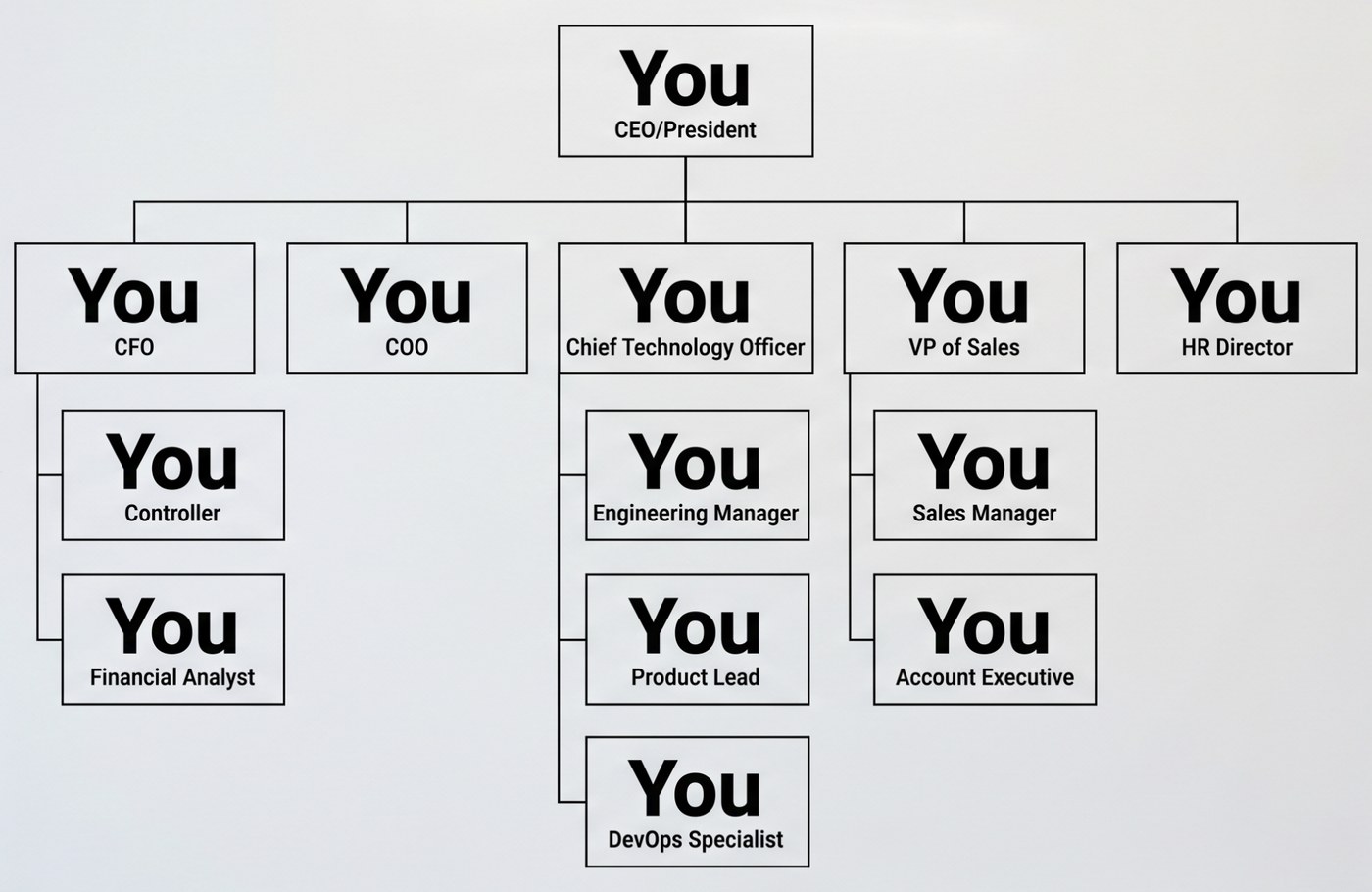
You’re the org chart.
Every question still ends up on your desk. Even the easy ones.
Your team can’t tell who owns what. So when something falls between the cracks, they ask you. When something needs a decision, they ask you. By the time you get to your own work, the day’s gone.
Here’s the thing. The problem isn’t your team. They’ve got no chart to follow.
Three reasons your org chart isn’t working.
You drew it once. It’s already stale.
A slide deck from eighteen months ago. Two people on it have left. Three have changed roles. Nobody trusts it. Nobody opens it.
It’s about titles, not work.
Boxes and lines tell you who reports to who. They don’t tell anyone who owns the actual work. Your team still has to guess. So they ask you.
Nothing’s tied to your systems.
The org chart sits in one app. The SOPs sit in another. When the two don’t talk, accountability slips through the cracks. You catch the fallout.
Map by department. Tie roles to systems.
systemHUB is built around the SYSTEMology method. The same method used with hundreds of businesses. Map the work first. Assign owners second. Tie everything to real systems.
Map by department, not by person
Start with six core departments. Marketing. Sales. Operations. Finance. HR. Management. The work stays even when the people change.
Assign owners to every system
Each system has a named owner. When a question comes up, your team knows exactly who to ask. The answer is never “ask the boss” anymore.
Remove yourself from department heads
Most owners head three or four departments at the start. The plan: one by one, hand them off. Stop being the default. Start running the business.
Want the full method? Read the book free →
Built for the way real teams own work.
Software is only half the story. The other half is the method. Here’s what systemHUB does to make ownership stick.

A chart your team can actually see
One visual chart. Departments grouped. Roles attached. Real photos of real people. Your team checks it instead of checking with you. Always current, because it lives next to the systems.

Every system has a named owner
Open any system and you see who owns it. When something needs a call, your team knows who to talk to. When a process needs updating, the right person gets the ping. Accountability built in.

Permissions by role, not by guesswork
Match access to the role. Admins, editors, contributors, readers. Each role gets exactly the rights they need. No more “who can change this?” confusion. No more guessing who broke what.

Spot the gaps before they bite
Every system shows its status at a glance. Status markers tell you what’s done, what’s in progress, what’s missing. You spot the gaps by department, not by accident. Fix them before they cost you a customer.
Doug & Andrea Glanville, The Sydney String Centre.

Doug and Andrea run The Sydney String Centre, a family-owned musical instrument business that started in a garage in 1991 and now employs 40 people across retail, repair, rentals, manufacturing, and eCommerce. Andrea took the Systems Champion seat, mapped the Critical Client Flow, and put a named owner on the work. Doug stopped being the default answer to every question.
You might also like
Or browse by outcome (holiday, exit, scale, succession, replace yourself) →
Things owners usually ask first.
What if we’re too small for an org chart?
If you’re the answer to every question, you already have an org chart problem. Even with five people, naming who owns what saves you hours every week. Start small. Map six departments. Assign owners. Watch the questions to you drop.
What if one person heads three departments?
That’s normal in a small business. The owner often heads four or five at the start. The chart isn’t about pretending. It’s about being clear. Map the reality now. Add the plan to hand them off over time. Track who’s actually owning what.
How is this different from BambooHR or Lattice?
Those are HR tools. They track people, leave, performance reviews. Useful, but separate from the work. systemHUB ties roles to the actual systems your team runs. When you open a system, you see the owner. When you look at a role, you see the systems they own. The org chart and the playbook live together.
What happens when roles change?
You update the owner on the system. Everything else updates with it. No more stale slide decks. No more hunting through Slack to find who owns what now. One source of truth, kept current because it lives where the work happens.
Do I have to map every system on day one?
No. Start with the Critical Client Flow. Ten or fifteen systems that deliver your core product. Assign owners to those first. Once those are clear, move outward. Simple beats perfect every time.
Stop being the answer key.
Map your departments. Assign your owners. Tie roles to real systems. Watch the questions stop coming to you. Simple beats perfect every time.
Start Free Trial