Ask a business owner for the operations manual and they hand one over. Ask for HR, same answer. Ask for the accounting procedures, no problem. Ask for the sales playbook and the room goes quiet. That gap is why revenue swings month to month: with nothing written down, your results ride on whoever happens to be selling that week.
Jack Daly has run a sales force of 2,600 people, built six companies from scratch and taken two of them to Wall Street. After Hyper Sales Growth came out, a wave of owners rang him wanting the same result. He asked each of them to send their sales playbook through first. 98 out of 100 did not have one. In this episode of the Business Processes Simplified podcast, Jack walks Dave through the six plays that belong in yours, plus the two foundations to lay before you write a word of it.
PODCAST SEASON 1: EP 7



Key Takeaways
- There aren’t 2,600 best ways to sell the same thing. Work out the best way, write it down and have everyone sell at that level.
- 98 out of 100 owners chasing hyper sales growth had no playbook. Sales is the one department that never gets a manual. The results show it.
- It takes nine touches before a prospect knows you exist. Most salespeople and most companies quit at five or fewer, so the effort is spent and nothing lands.
- A sales manager’s job is not to grow sales. It is to grow salespeople in quantity and quality. Past about twelve reps, one manager cannot do it properly.
- First-time buyers cannot buy real value, only the perception of it. Apple, Starbucks and Harley Davidson all charge a premium because they built the perception first.
- Three quarters of the people you sell to think differently from you. Read assertiveness and logic versus emotion in the first sixty seconds, then adjust.
In This Episode
- 02:45 Foundation one: sports teams are run better than most businesses
- 04:00 Foundation two: leverage, assistants and high payoff activities
- 05:15 Model the masters: strip your top two producers clean
- 07:15 Why the playbook is never finished
- 08:30 Play one, backward thinking: goals, plan, measurement, accountability
- 10:45 Play two, proactive pipeline management across three baskets
- 14:15 Play three, the touch system and the nine touch rule
- 20:15 Play four, perception of value from Apple to Harley Davidson
- 26:45 Play five, reading the four personality styles
- 33:45 Play six, the success guide: objections, questions and why us
- 37:30 The three sins of sales management
👤 Today’s Guest, Jack Daly
Jack Daly is a serial entrepreneur and sales growth expert with over 30 years of experience building and leading high-performance sales organisations. He has grown six companies from scratch, two of which went nationwide and two of which ended up selling on Wall Street, to Solomon Brothers and First Boston. In one notable chapter, Jack relocated to California and grew a mortgage company from four founders to 750 employees and 22 offices in just 18 months, producing $350 million per month in mortgages and $42 million in profits over its first three years.
He later helped another enterprise earn Ernst & Young’s Entrepreneur of the Year award and a #10 ranking on the Inc. 500 list. Jack is the bestselling author of Hyper Sales Growth, The Sales Playbook for Hyper Sales Growth and Paper Napkin Wisdom, a Vistage UK Overseas Speaker of the Year, a TEC Australia Speaker of the Year and a former U.S. Army Captain. Outside of business he has completed 15 Ironmans across eight countries, run 88 marathons across 49 U.S. states and played golf at over 92 of the Top 100 courses in America.
Website: jackdaly.net
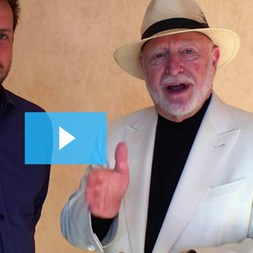
Prefer to Watch? Catch the Video Version
📋 The Six Plays in Jack Daly’s Sales Playbook
Based on the interview with Jack Daly, serial CEO, sales trainer and author of Hyper Sales Growth.
Jack once ran a sales force of 2,600 people working out of hundreds of offices around the US. Every office got the same speech when he visited. There aren’t 2,600 best ways to sell this stuff, so let’s work out the best way and have everybody sell at that level. That one idea is the entire argument for a sales playbook. What follows is what he puts inside one.
“There aren’t 2,600 best ways to sell this stuff.”
Jack Daly, 02:34
Two foundations to lay before the first play
The first foundation is systems and process. Jack sums it up in a line, sports teams are run better than most businesses. There isn’t a coach in any sport at any level who would put players on the field without a playbook, yet that is exactly what most companies do with their sales teams. Ask a business for its operations manual and you get a document. Same for HR, same for accounting. Ask for the sales version and you get a shrug, followed by the line Jack has heard a thousand times: “I got my own style.” He is blunt about what that means. Imagine 2,600 salespeople each with their own style, or a coach hearing it from a player. You’re off the team. The irony is that every other department already runs on documented systems, so sales is the odd one out by habit rather than by necessity.
The second foundation is leverage, which Jack defines simply as making more money with less work. Two moves get you there. The first is delegation: there are things that need doing in sales but do not need doing by the salesperson.
“If you don’t have an assistant, you are one.”
Jack Daly, 04:14
The second is where he points people when they ask what the top 5% of salespeople actually do differently. They are manically focused on high payoff activities. They scrape away everything that will not win them business and pour the time into what will. Jack runs his own life the same way, with seven personal assistants so his hours go into the two things only he can do, promoting himself and being on stage.
Underneath that sits a habit he calls modelling the masters. Join a new company, find the top two producers, then spend a week with each of them. Learn what they do and why, what they refuse to do and why, how they manage their pipeline and their touches, the five biggest reasons they win and the five potholes they fell into so you can drive around them. Strip them clean, build the playbook from what you learn, then practise it.
One rule applies to the whole thing before we get to the plays: the playbook is never finished. It is always under construction. The moment anyone on the team finds something that works, it gets plowed back in and everybody learns the new play, exactly the way a coach adds to a sports team’s playbook rather than running last season’s.
1 Backward thinking: define success, then chart back
Jack borrows Stephen Covey’s line here, begin with the end in mind. He asks a salesperson one thing first: how much do you want to make this year? Once he has the number, the answer breaks into four parts.
- Your goals, in writing. Exactly what you want to achieve.
- A written plan for getting there, including the specific activities the plan requires.
- A system of measurement, because things that get measured get done.
- A system of accountability, something to hold your feet to the fire.
He treats that last one the way he treats the gym. You hire a strength trainer so somebody makes sure you turn up on time and do the right exercises in the right order. Jack publishes his own goals, process, measurement and accountability on his site under a tab called Life By Design, so clients can watch the system working instead of taking his word for it. This is the difference between a documented sales playbook and a set of targets written on a whiteboard in January.
Whose job is it to run a salesperson through this? The sales manager’s. And when a rep pushes back with “I’ve got my own style”, Jack reads it plainly: that is somebody who does not want to be held accountable.
2 Proactive pipeline management: three baskets, reviewed on a cadence
If Jack were your sales manager, he would want to see your baskets. Not a summary, the actual list, whether it lives in a CRM or on paper.
He splits every relationship into three groups. The definitions matter, because most teams blur them:
- Prospects. People who have never done business with you.
- Customers. People who once did, or who occasionally do.
- Clients. People who do regular, ongoing business with you. A lot of it.
Then he works each basket in rank order, number one, number two, number three, all the way down, asking the same questions of every name. When did you last touch them? How often in the last 90 days? In what ways are you touching them? For customers and clients he adds one more: what is standing in the way of them doing more business with us? Working that last basket properly is how you hold onto the customers you already won rather than quietly leaking them out the back.
The minimum cadence is monthly, with every salesperson. Jack’s exceptional clients run it weekly. He goes back to sport to explain why: if the team plays a game every week, the coach isn’t waiting a month to take corrective action. He also puts a ceiling on the manager’s load. Go much past twelve salespeople and people start being ill-served. He got the same answer from a waiter on a 6,000-passenger cruise ship, who reckoned the best waiters cap out at about twenty covers.
“A sales manager’s job is to grow salespeople in quantity and quality.”
Jack Daly, 10:30
Grow the salespeople and they will grow your sales. That is the entire job description. It is also why the pipeline review belongs to the manager rather than the owner.
What is the missing playbook actually costing you?
Our free Cost of Chaos Calculator puts a dollar figure on the work your business is redoing because nobody wrote it down.
3 The touch system: nine touches and four databases
Here is the number that should change how you run follow-up. It takes nine touches before a prospect knows you exist. Most salespeople and most companies quit at five or fewer, which means they spend the time, the money and the effort. Nobody on the other end ever registers that they were there.
“It takes nine touches before your prospect knows you exist.”
Jack Daly, 14:30
Jack builds the system on four databases: prospects, customers, clients, plus a fourth called other, which catches anyone you meet in life who does not fit the first three. He uses himself as the example. He is in the US, so if you only sell in Australia he is not a prospect, a customer or a client. But with roughly 5,000 Australian business owners and salespeople in his database, he is a very good other.
The method has to vary. Personal visit, phone call, email, voicemail, snail mail, social media. Sit at your computer firing out emails as your only play and the recipient hits delete faster than you can send them.
The content has to vary most of all. Jack’s view is that the real weakness in most touch programmes is that everything is about the company. His categories:
- Things about your company
- Things about you, whether that is the marathon you ran, the wine or the golf
- Things that help them get better in their industry
- Things that help them get better at business generally
- Things you know about them personally, family, friends or sport
- Things that are simply fun, because people enjoy doing business with people who are fun
It sounds like a mountain of work. Jack’s point is that it isn’t. You build it once, in less than a day, it costs very little. Then you hand the execution to an assistant. That is the same principle behind every sales system worth automating: design it deliberately once, then stop being the person who runs it.
4 Perception of value: what people buy before they can buy value
Jack calls this one a game breaker. The question behind it: what perception of value are you creating in the market, such that people will go out of their way or pay a premium to do business with you?
The distinction he draws is sharp. The very first time somebody buys from you, they cannot buy real value. They have not experienced it yet. All they can buy is the perception of it. The mistake most companies make is spending all their energy proving they have real value and almost none in a room working out how to create the perceived kind.
His examples are deliberately familiar. Take Apple, where Steve Jobs built the mystique while Woz built the machines. More than half the people in Jack’s live audiences still have their iPhone box, because it was constructed to make opening it feel like an occasion. Then Starbucks, where Schultz built an experience around the idea of drinking coffee, so you buy from a barista rather than a clerk and order a venti rather than a large. Then Harley Davidson, where General Motors has to sell seven cars to make what Harley makes on one bike.
Jack heard the Apple version from Jobs himself. Shown Jack’s prospects, customers and clients framework, Jobs told him they had taken it somewhere else: they weren’t interested in clients, they were interested in building a cult. A cult member waits six months for the new model while a competitor already has a faster one on the shelf, then pays a premium for the privilege.
The commercial payoff is the part worth writing into the playbook. Create enough perceived value and enough trust and the price objection shrinks, or stops coming up at all.
5 Personality styles: two questions in the first sixty seconds
Ride along with the top 5 to 10% of salespeople and you notice something. They don’t sell to everybody the same way. They behave like chameleons, adjusting to whoever is in front of them, because people do business with people they like and they tend to like people who are like them.
Everyone lands in one of four styles by about the age of 13, shaped by genetics and how they were raised. Jack’s framing is that it is a life sentence. You get parole and you can visit the other boxes, but at night they put you back in your cell. Which means three quarters of the world runs on a different style from yours. Selling to everybody as if they were you risks a bad first impression three times out of four. Bad first impressions are often not recoverable.
Two questions sort it out. You can answer both in the first minute.
- Are they more assertive or less assertive than the people you usually deal with? Assertiveness comes screaming out of somebody inside 60 seconds.
- Do they decide more on logic or more on emotion? That answer splits each half in two.
| Style | Assertiveness | Decides on |
|---|---|---|
| Driver | More | Logic |
| Expressive | More | Emotion |
| Analytical | Less | Logic |
| Amiable | Less | Emotion |
Jack uses himself to demonstrate. Assertive, decides on logic, so he is a driver. Sell to him by being blunt and direct, getting to the point, telling him how he benefits and getting out inside 15 minutes. Bury him in detail, proof and documentation (exactly what an analytical needs) and he’ll throw you out. Open with the weather and the family (the thing an amiable enjoys most) and you get the same result. Run that 15 minute call on an analytical and you will never sell to them either.
The style he flags hardest is the expressive. Around 70% of the people who gravitate towards a sales career come out of that box. Of the four styles, they are the worst listeners. Given that the shortest course on sales is ask questions and listen, most of the profession is starting on its weakest muscle. Jack’s book recommendation for going deeper is The Platinum Rule by Tony Alessandra, which covers how to identify each type and what words to use with them.
The practical step is small and it belongs in your playbook. Once you have worked out somebody’s style, record it in your contact management system right next to their name. From then on, you know who you are walking in to meet before you get out of the car.
6 The success guide: nothing on a sales call should surprise you
The last play rests on one observation. There is hardly anything that happens on a sales call you could not have anticipated before you got there. Which means there is no good reason to be unprepared for any of it.
Objections are the clearest case. Salespeople talk as though there are infinite objections. Jack challenges live audiences to put 15 on the board and offers to buy drinks for two hours if they manage it. He has never bought a cocktail. So if the real number is under 15, work out what they are, word out the best answers, put them in the playbook and practise them until you can deliver each one as though it is the first time you have ever said it.
Same logic for questions. If asking questions and listening is the shortest course on sales, then work out the best questions to ask on a call and rehearse those too.
And there is one question every buyer asks silently before they commit: why should I do business with that company? Everybody asks it, most never say it out loud. Work out the best honest answer compared with your competitors, put it in the playbook and practise the play.
None of this is hard. Sales feels hard when there is no playbook, no identified process and no practice behind you. Jack’s comparison is the gymnasts he watched at the Rio Olympics: a two to three minute routine on the biggest stage there is, built on daily practice since they were six years old. The best people in any discipline practise. Salespeople are the ones who practise on their prospects instead.
The three sins of sales management
Before you hand the finished playbook to a sales manager, Jack wants you to check you haven’t committed one of these. They are what he sees holding companies back from growing at pace.
- The owner is also the sales manager. Which means both jobs are being done part-time. Neither of them well.
- You promote your best salesperson into the manager’s chair. You lose your best salesperson and you get a mediocre manager, because they are completely different jobs needing completely different skills.
- You promote your best salesperson and tell them to keep their book of business. This is the one that makes Jack pull his hair out. Six months of doing both and something gives.
The better arrangement is the obvious one once it is said out loud. Leave your best salesperson selling. Have the sales manager climb inside that person’s head to document what they do. Then the manager’s job is what it should have been all along: teach, coach and train the rest of the team to run the same plays.
Sales is one department. How are the other eight holding up?
The free Systems Strength Test scores your business across nine areas in about two minutes and shows you where the next playbook is needed most.
Bringing it full circle
We opened with the quiet room: the owner who can produce a manual for operations, HR and accounting, but nothing at all for the function that pays for the rest of them. Jack’s six plays close that gap. Not one of them asks for talent you don’t already have on the team.
Pick a single play and document it this week. A version one playbook beats a perfect one nobody ever writes. Once it exists you can hire to it, train to it and improve it, which is exactly how SYSTEMology treats every function in a business.
“People and companies tend to underperform to their capabilities because we rush to the urgent at the expense of the important.”
Jack Daly, 38:49
That is the trap in one sentence. Your sales team isn’t broken. Your sales system is, which is something you can actually sit down and fix.
🔗 Explore More
Frequently Asked Questions
What actually goes into a sales playbook?
Six things, by Jack’s count. Written goals with a plan, measurement and accountability behind them. A proactive pipeline review across prospects, customers and clients. A touch system. Your perception of value story. How to read and adapt to personality styles. And a success guide holding your scripts, objection answers and best questions. All of it written down. None of it ever finished.
How often should a sales manager review the pipeline?
Monthly is the floor. It happens with every salesperson individually. Jack’s strongest clients run it weekly. His reasoning is the coaching one: if the team plays a game every week, nobody waits a month before correcting what went wrong.
How many follow-ups does it take before a prospect notices me?
Nine touches, in Jack’s experience, before a prospect knows you exist. Most salespeople and most companies stop at five or fewer. That is why so much follow-up effort produces nothing: it was abandoned just before it started working.
Won’t scripts turn my salespeople into robots?
Jack’s answer is that structure makes people better, not stiffer. The script handles the predictable part so the rep can spend their attention on the relationship. He does warn against letting HR screen your salespeople, because his best producers tend to be the ones with the judgement to override the process when it matters.
Should the owner or the sales manager own the playbook?
The sales manager. Jack’s first sin of sales management is the owner wearing both hats, which means doing both jobs part-time. The owner needs to understand sales. The manager builds the playbook, coaches to it and holds the team to it.
Where should the finished playbook actually live?
Somewhere your team will open it, which rules out a document on somebody’s desktop. That is the case Dave makes for keeping your systems in one searchable home, where a new play can be added the moment someone on the team finds one that works.
Ready to get started?
systemHUB gives you 100+ ready-made SOP templates across Sales, Marketing, Operations, HR and Finance. Customise them for your business and start building a business that runs without you.
Thank you for listening!
Thanks for joining us for this episode. Do you have any questions or feedback you'd like to share? We'd love to hear it! Let us know in the comments section below.
If you enjoy listening to this podcast, please share it on Facebook and leave an honest review on iTunes. We'd love to know what you think.
Remember, the next system we share could be just the one you’ve been looking for, so subscribe on iTunes so you can get the latest episodes as soon as they’re published.
About The Show
Business Processes Simplified
We interview industry experts and have them share their best small business systems and processes. This is the quickest, easiest and most efficient way to build a systems centered business.