
Guides · Free course · Define
How to Map Your Critical Client Flow
Twenty minutes and one page. By the end you'll know exactly which systems to start with.

In 60 seconds
- You don't need hundreds of systems. About 20% of them deliver 80% of the results. Start with 10-15.
- Your Critical Client Flow (CCF) finds them. It's a one-page map of how a client moves through your business.
- Map one client and one product, using only what you do today.
When most owners hear "systemise your business", they picture hundreds of documents and months of writing. No wonder it keeps getting pushed to next quarter.
You need far fewer systems than you think. The eighty twenty applies here too. A small handful of systems drive most of your results and your first job is finding them.
That's what the Critical Client Flow (CCF) does. It's a one-page map of the steps your client and your business go through to deliver your core product or service. It's the first stage of SYSTEMology: Define.
Step 1: Pick one client and one product
You probably have lots of client types and products. Mapping them all at once is overwhelming. Pick one of each.
Choose your dream client (the ones who pay full price and refer their friends) and the first thing they usually buy from you. The rest of your business keeps running. This is about focus.
Step 2: Map the flow
Work down these stages in two or three words per step:
- Attention: how people find you
- Enquiry: how they get in touch
- Sales: how you close the deal
- Money: how you get paid
- Onboarding: how a new client gets started
- Delivery: how the work gets done (keep it high level)
- Repeat or referral: how they come back or send friends
Aim for 7-12 steps. One rule matters more than the rest: capture what you're currently doing, not what you would like to be doing.
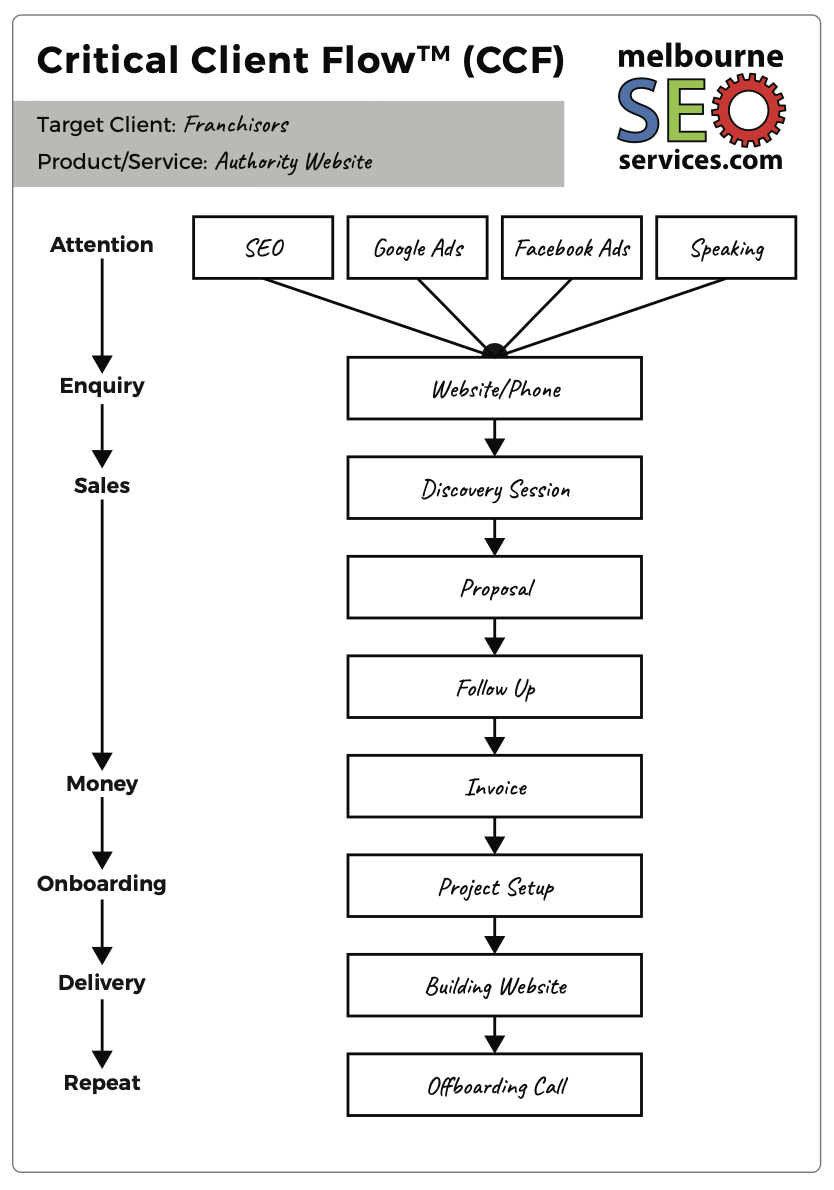
Here's the CCF from my own agency, Melbourne SEO Services. Notice how little detail is on it.
Step 3: Show someone
Show your CCF to someone outside the business. If they get it without you explaining every step, you're done.
What it gives you
Every step on your CCF points to a system. Together they make your first 10-15 systems, your Minimum Viable Systems (MVS): the minimum you need to win work, get paid and deliver. Start there and ignore everything else for now.
You'll spot gaps too. Inconsistent leads? You probably rely on one source of attention. Clients chasing you? Your onboarding isn't setting expectations. Note them down. Fixing comes later.
Do this now (20 minutes)
- Grab the free CCF template or let the free CCF Builder coach you through it with AI.
- Write your one client and one product at the top.
- Fill in each stage with what you do today.
- Trim to 7-12 steps and show it to someone.
Faster in systemHUB: add each CCF step as a system title in your Systems library. The MVS Generator suggests a starting list for you to trim. Start a 14-day free trial, no card needed.
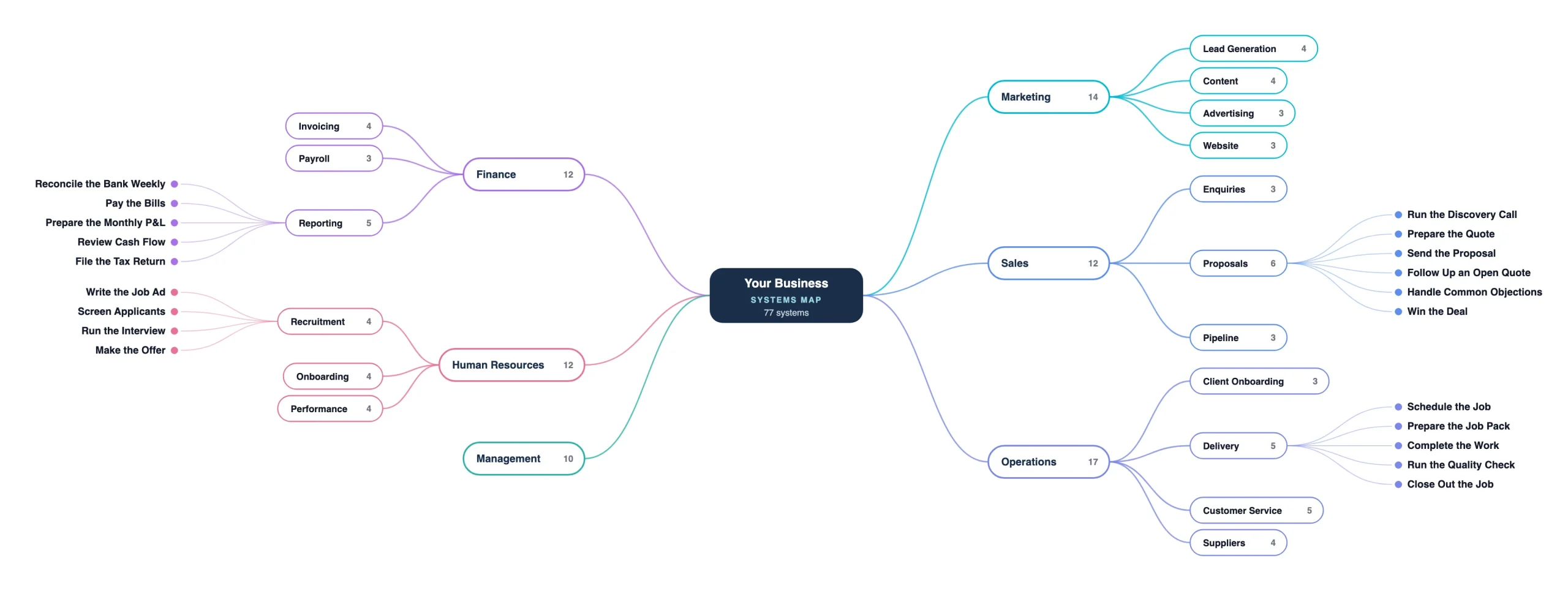
Want to see one built live? Watch Nick Griffiths map the MediBooks CCF.

Real-world example
Gary McMahon founded Ecosystem Solutions, an ecological consulting firm. He spent years working 100-110 hours a week. Mapping his CCF let Gary and his team see their bottlenecks on one page. He's since taken his first three-week family holiday and profit is up around 80%. His summary of a systemised business: "Peace of mind."
Once your CCF is on one page, you've pushed the first domino. See you in the next lesson.