If you dread networking events, avoid cold calls, and feel drained after every sales conversation, you’re not broken. You’re probably an introvert trying to sell like an extrovert, and it’s costing you deals and energy.
In this episode, Matthew Pollard, bestselling author of The Introvert’s Edge and serial entrepreneur, shares the introvert sales system he used to build multiple multi-million-dollar businesses before turning 30. His approach replaces charisma with preparation, scripts, and storytelling frameworks that let introverts close more deals without faking a personality. Dave and Matthew unpack why building repeatable systems is the introvert’s ultimate competitive advantage. Hit play to hear the full framework.
PODCAST SEASON 4: EP 5



- 0:01:07 What makes someone an introvert
- 0:03:39 Why introverts are natural systems thinkers
- 0:06:51 Preparation vs winging it
- 0:14:41 The best salespeople listen more
- 0:20:36 The no small talk sales method
- 0:29:29 When marketing makes selling unnecessary
- 0:32:24 The China success coach story
- 0:38:44 Networking without the cringe
- 0:43:37 The “Rapid Growth Guy” elevator pitch
- 0:50:09 Telling stories that sell
- 0:54:43 AI, sales and why authenticity wins
- 1:03:33 The 30-second storytelling framework
👤 Today’s Guest, Matthew Pollard
Matthew Pollard is a bestselling author, dynamic keynote speaker, and serial entrepreneur known as the “Rapid Growth Guy.” Starting from door-to-door sales in Australia, Matthew built multiple multi-million-dollar businesses before the age of 30. He is the author of The Introvert’s Edge and The Introvert’s Edge to Networking, and founded Rapid Growth Coach to help small businesses and introverts outsell their competition using systems-based sales scripts, storytelling frameworks, and targeted networking strategies.
Website: matthewpollard.com
“The less you speak, the more you will sell.”
— Matthew Pollard, Author of The Introvert’s Edge
📋 The Introvert’s Sales System: 9 Principles from Matthew Pollard
Based on the interview with Matthew Pollard, Author of The Introvert’s Edge and Founder of Rapid Growth CoachMatthew’s framework flips the conventional wisdom about sales on its head. Where most advice tells you to be more outgoing, more confident, more charismatic, Matthew argues that introverts already have the traits that close deals. They just need a system to channel them. Here are the nine principles from the conversation.
Step 1: Recognise That Systemisation Is the Introvert’s Edge
Introverts are natural system builders. They instinctively seek structure, preparation, and order, all qualities that translate directly into business process design. Matthew argues that this isn’t a workaround for introversion; it’s the reason introverts can outperform extroverts in sales and business development. The key is to stop trying to mimic extroverted behaviour and instead lean into the systematic thinking that already comes naturally.
Step 2: Understand What Introversion Actually Means
Introversion is not shyness, social anxiety, or a personality flaw. It’s simply a matter of where you draw your energy. If networking events, stage presentations, or extended social interactions leave you drained, you’re likely an introvert. Matthew is clear that treating introversion as something to overcome is a mistake. The goal is not to become an extrovert; it’s to build systems that let you perform at a high level without depleting your reserves.
Step 3: Turn Rumination into Continuous Improvement
Introverts tend to replay difficult interactions in their heads, often harshly. Matthew reframes this tendency as a hidden asset: the same instinct that fuels rumination can drive structured continuous improvement. The shift is simple but powerful. After a tough conversation, forgive yourself first, then identify one specific thing you would do differently next time. That single improvement compounds over dozens of interactions and becomes a genuine competitive edge.
Step 4: Sell by Listening, Not Talking
Most people assume the best salespeople are the loudest in the room. Matthew’s experience is the opposite. The top closers are the ones who ask precise, consultative questions and then genuinely listen to the answers. Introverts excel at this because active listening is a natural strength, not a learned skill. The principle is counterintuitive but backed by Matthew’s track record: the less you speak, the more you sell.
Step 5: Pick a Sales System and Stop Winging It
It almost doesn’t matter which sales system you choose, as long as you choose one and follow it consistently. Winging a sales conversation is dangerous for introverts because unstructured interactions are exactly the ones they ruminate over afterwards. A defined process, complete with scripts and decision points, removes the guesswork and lets you focus your energy on the client rather than on figuring out what to say next.
How much is it costing you to run your business without a system?
Matthew’s entire framework rests on replacing improvisation with a repeatable process. If your sales, delivery, or operations still rely on winging it, the cost is real. Use our free Cost of Chaos Calculator to put a dollar figure on it.
Step 6: Use the “No Small Talk” Method
Matthew’s consultative selling approach skips the surface-level chatter entirely. Instead of easing into a conversation with pleasantries, you demonstrate that you’ve done your research, you understand the client’s world, and you’re there to diagnose, not pitch. The goal is to help the prospect see that what they think is their problem is actually a symptom of something deeper. When you create that shift in perspective, the client stops shopping on price and starts seeing you as the only person who truly understands their situation.
Step 7: Lead with Your Mission, Not Your Title
At networking events, most people answer the question “What do you do?” with their job title. Matthew calls this the “commodity box” because it instantly invites comparison. Instead, lead with your mission: who you help and the transformation you create. People don’t care what you do until they see that you care about a specific problem. Convey that care through a short, compelling story rather than a polished elevator pitch. Stories stick; titles get forgotten.
Step 8: Prepare for the Stage Like You Prepare for a Client
Matthew argues that introverts are often more effective speakers than extroverts because they prepare meticulously. Where an extroverted speaker may rely on charisma and improvisation, an introverted speaker builds their talk like a system: researched, structured, rehearsed. That level of preparation lets introverts channel genuine empathy on stage and engage more interactively with the audience. The result reads as authenticity, which is far more persuasive than performance.
Step 9: Fish Upstream for Ideal Clients
Rather than chasing cold leads, Matthew recommends partnering with professionals who already serve your ideal client at an earlier stage. His example: if you help immigrants start businesses, partner with an immigration attorney who sees those clients before they need you. By the time the referral arrives, the client is pre-qualified, pre-trusting, and far less price-sensitive. This “fish upstream” strategy eliminates the need for high-volume prospecting and replaces it with a small number of high-converting, warm introductions.
How strong are your business systems right now?
Matthew’s framework proves that the right system can transform your weakest area into your strongest. Where else might a simple process be the missing piece? Take our free System Strength Test, a 2-minute assessment that scores your business across 9 dimensions and shows you exactly where to focus.
Matthew’s career is living proof that the loudest person in the room is rarely the one closing the deal. What makes this conversation so useful is the specificity: it’s not a motivational pep talk about “being yourself.” It’s a set of concrete, system-driven strategies that swap small talk for research, charisma for scripts, and cold prospecting for upstream partnerships.
If you’ve ever walked away from a networking event thinking “I’m just not built for this,” the real problem wasn’t your personality. It was the absence of a process. Start with one of Matthew’s nine principles, and build from there.
Ready to put this into practice?
systemHUB gives you 100+ ready-made process templates across Sales, Operations, HR, Finance, and Marketing, so you can start building a business that runs without you, today.
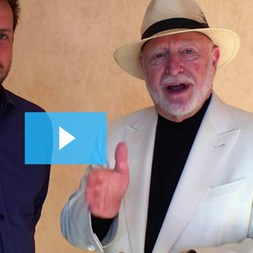
Want to see business systemisation in action? Watch Dave walk through how to document your first business process step by step.
🔗 Explore More
Ready to get started?
systemHUB gives you 100+ ready-made SOP templates across Sales, Marketing, Operations, HR, and Finance. Customise them for your business and start building a business that runs without you.
Thank you for listening!
Thanks for joining us for this episode. Do you have any questions or feedback you'd like to share? We'd love to hear it! Let us know in the comments section below.
If you enjoy listening to this podcast, please share it on Facebook and leave an honest review on iTunes. We'd love to know what you think.
Remember, the next system we share could be just the one you’ve been looking for, so subscribe on iTunes so you can get the latest episodes as soon as they’re published.
About The Show
Business Processes Simplified
We interview industry experts and have them share their best small business systems and processes. This is the quickest, easiest and most efficient way to build a systems centered business.