Most owners build the systems, then drop a Loom link on Day 1 and hope it sticks. Here’s the conversation that actually makes it stick.
You can spend twelve months documenting every process in your business and still watch a new hire ignore the lot of them by week three. The SOPs aren’t broken. The induction is missing.
When someone joins your team, they need a frame for why your systems exist before they touch a single one. They need to know how a systemised business thinks about a problem.
I run an 84-minute session with every new person who joins us. It walks them through why we use systems, what a system actually is, how we use them in practice, and what we want them to do in their first 90 days. The video below is that session, raw. The page below it is the skim-and-share version.
Use it as-is. Send the URL to your next hire on Day 1, sit them in front of it, then have a 30-minute chat afterwards.
Share this page with your next hire on Day 1. Free, no signup, no gate.
For the owner reading this first
Quick context before you share it.
This started inside our paid program (Business Systems Accelerator, module 4) and we made it free because the gap is everywhere. Owners spend months building SOPs, hire someone new, and watch them invent their own version of every task because nobody explained why we have a documented version in the first place.
The whole session works because it doesn’t open with “here are our processes.” It opens with “here’s why we use processes, and here’s how it benefits you.” That second framing is the part most owners skip, and it’s the part that makes the systems stick.
The rest of this page speaks directly to your team member. Skim it, then share the URL.
Welcome to the team
If your manager just sent you here, you’re in the right place. Press play on the video above when you’ve got 90 minutes. This page is the written version of what’s in there.
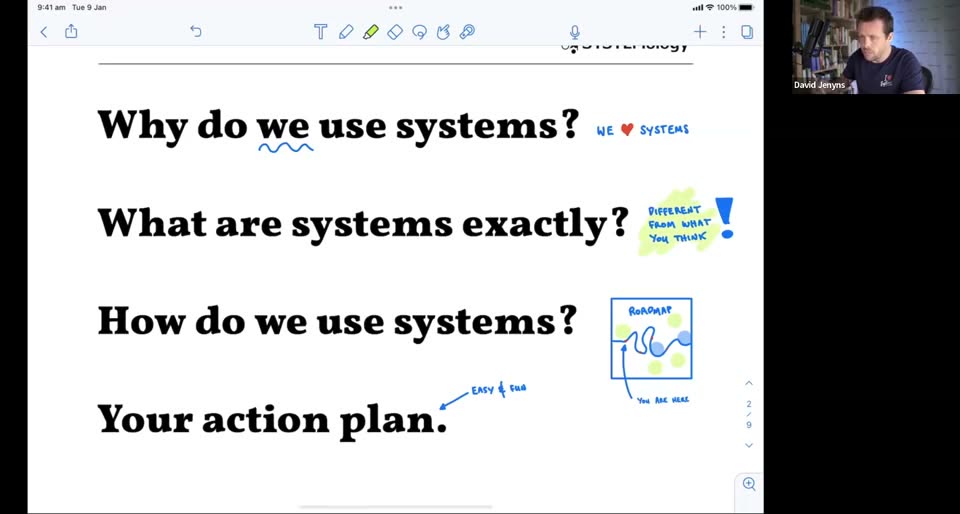
We’ll cover four things:
- Why we use systems (and how that helps you)
- What a system actually is (it’s probably not what you think)
- How we use systems in practice here
- What you should do in your first few weeks
Take notes if you like. Or don’t. The point is that you leave with a clear picture of how this company thinks about getting work done, so when something doesn’t make sense, you know which questions to ask.
Why we use systems (this benefits you)
Most people hear “systems and processes” and picture a corporation crushing the soul out of a job. Boring. Restrictive. The opposite of being trusted to do good work.
That picture is wrong.
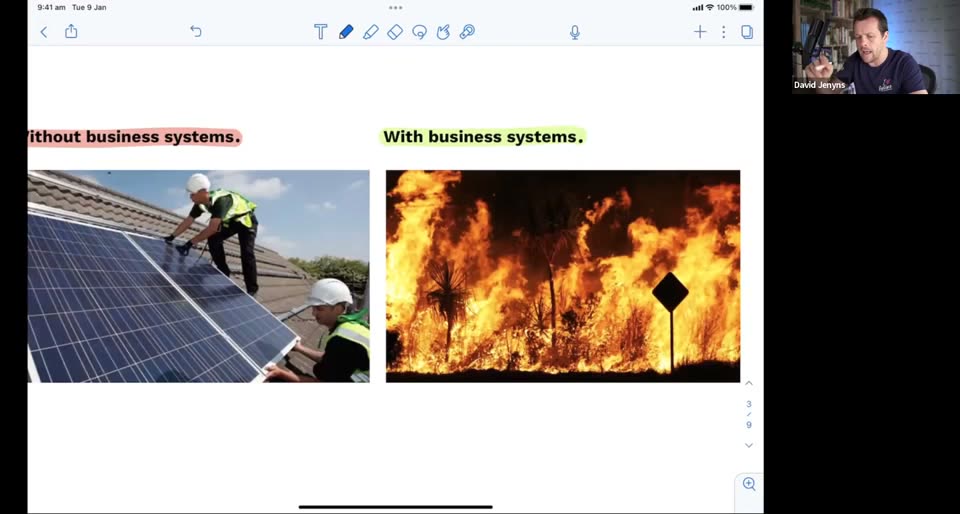
A business without systems runs on whoever happens to be in the room that day. The owner can’t take a holiday without their phone ringing. New hires get a different answer every time they ask the same question. The team gets stuck doing the same hard task every Monday because nobody figured out an easier way.
A business with systems frees the people inside it. You know what you’re meant to do. You know how to do it. You know what good looks like. And the moment you spot a better way, that better way gets captured and becomes the new standard for everyone.
The part most owners forget to tell you: the fastest way to grow inside a systemised company is to document what you do well, then teach someone newer to do it. The day you successfully hand off your current role is the day you’re free to grow into your next one. Systems are the lever that moves you up.
Gary McMahon ran a solar company called Ecosystem Solutions. He was working 70-hour weeks. Then he and his team documented everything. Two years later he was working 20 hours a week and the business was running better than when he was running it himself. That same playbook is what we’re handing you.
What a system actually is
A system is a series of steps that produces a consistent outcome. That’s the whole definition.
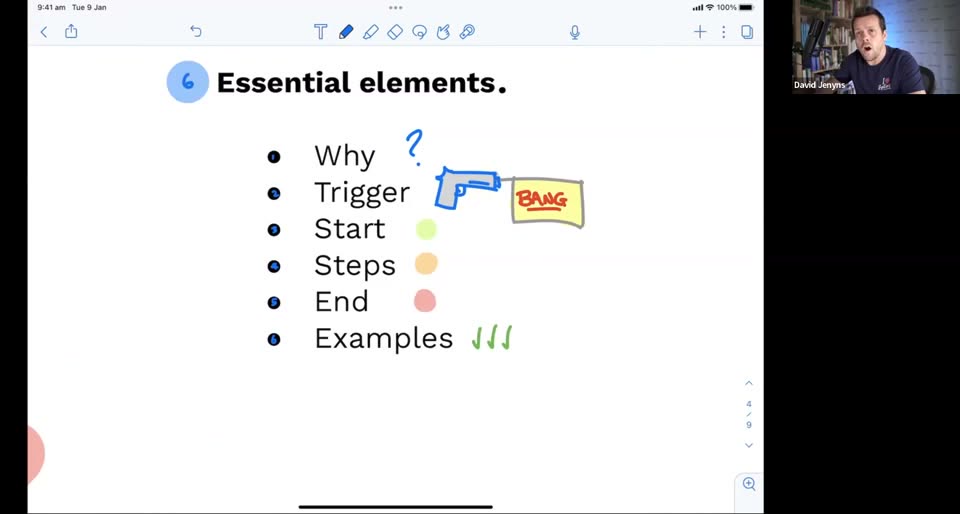
When you write one down, six things need to be on the page:
- Why the system exists. The outcome we’re trying to produce.
- Trigger. What kicks it off. A booking, an enquiry, a date, a signal.
- Start. Where you begin. The very first action.
- Steps. The middle. The thing you do.
- End. How you know it’s finished.
- Examples. Real ones. So somebody two years from now still knows what good looks like.
If you find a system in our company that’s missing any of those six, that’s your first improvement. Add the missing piece. Tell the systems champion. You just made the company a little better.
One more thing. We use an 80% solution rule. A system that captures 80% of what you do is far more useful than a perfect system that never gets written. If you’re waiting until it’s perfect before you save it, you’ll wait forever. Save the 80, ship the 80, improve later.
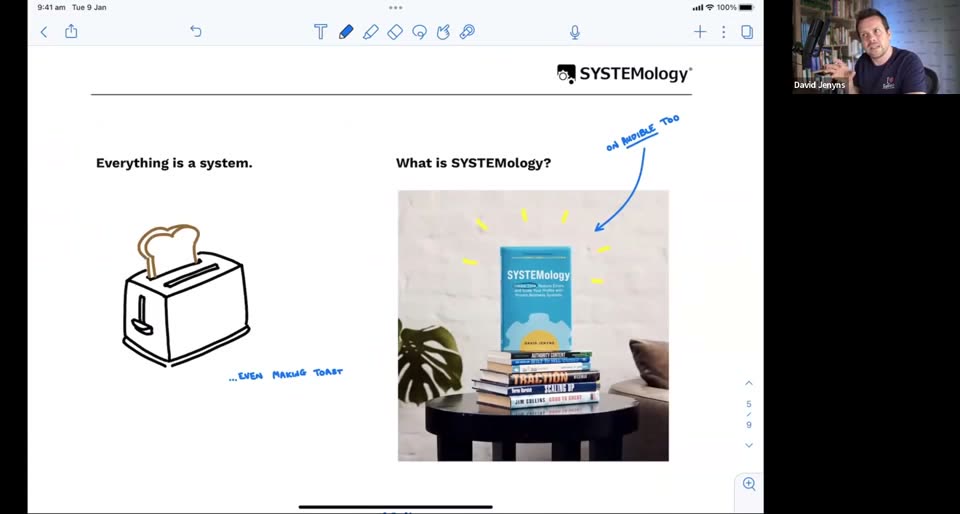
And don’t get precious about what counts as a system. Making toast is a system. So is closing a sale. So is firing someone. The mechanics are the same. Define the steps. Write them down. Hand them over. That principle scales from your morning coffee to running a public company.
Every problem is a systems problem
This is the mindset shift that takes most people the longest.
When something goes wrong here, our default reaction isn’t to blame the person. Our default reaction is to ask: what system failed, or what system is missing?
Customer complaint? Systems problem.
Two team members did the same task twice? Systems problem.
Something fell through the cracks? Systems problem.
Almost nothing in business is a “person” problem on closer inspection. Almost everything is a system that was unclear, missing, or had a step that nobody updated.
This matters for you in two ways.
First: when you mess something up, your first response should be “what’s the system?” not “I’m sorry.” Both, ideally. But if the system was missing, that’s not on you. We’d rather hear “this needs a system, I’ll draft one” than watch you absorb blame for a process gap.
Second: when you spot a problem in someone else’s work, don’t go after the person. Go after the process. Systems are the safe place to put complaints, because they don’t have feelings.
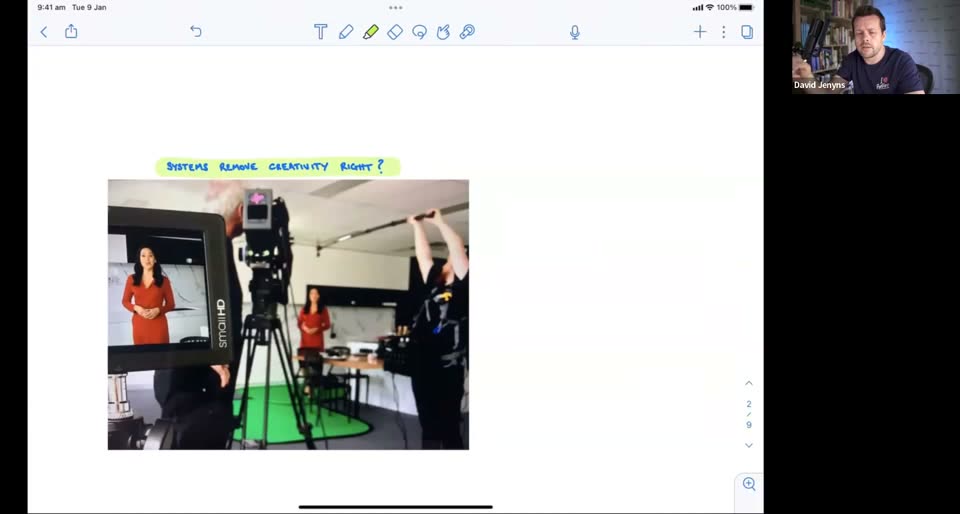
A common worry I get from new hires: “won’t all this systems stuff kill the creative part of my job?” Opposite. Systems remove the boring decisions so the creative ones get more of your attention. A film crew uses a shot list precisely so the director can think about the performance instead of whether the camera is plugged in.
What a real system looks like here
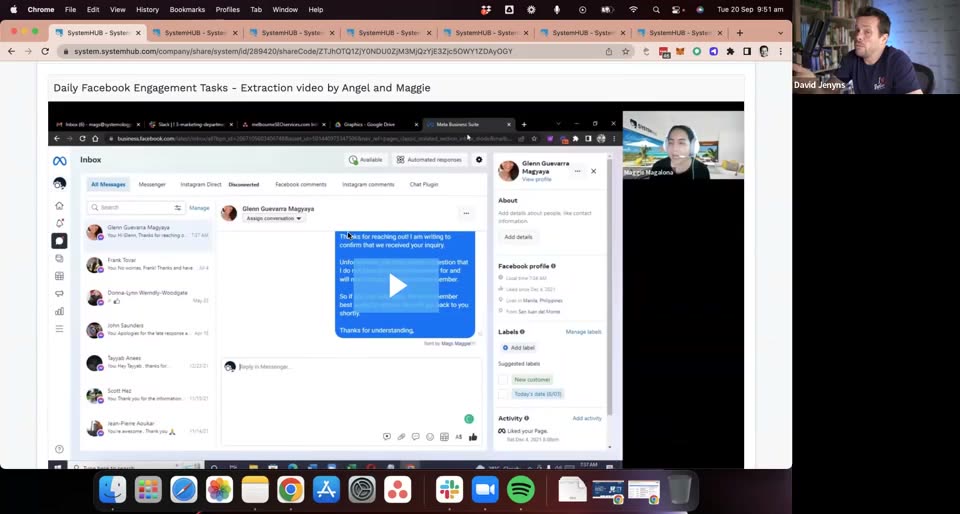
Most of our systems live as a short recorded video plus a checklist. We call the recording a “knowledgeable worker” capture: the person who currently does the task records their screen while they walk through the steps, talking like they’re training a new starter. That’s it.
You’ll see hundreds of these in your first month. Here’s roughly what each looks like:
- The six elements (why, trigger, start, steps, end, examples) at the top
- A short Loom of someone doing the task
- A checklist of the actual steps
- Linked templates, scripts, or assets as needed
You don’t have to memorise any of this. You just need to know where to look and how to read one. Your systems champion will walk you through the library in your first week.
One thing we ask of you: when you do a task three or four times and notice a better way, your job is to update the system. Not raise a ticket. Not flag it for someone. Update it. That’s how the library stays alive.
How to make it stick
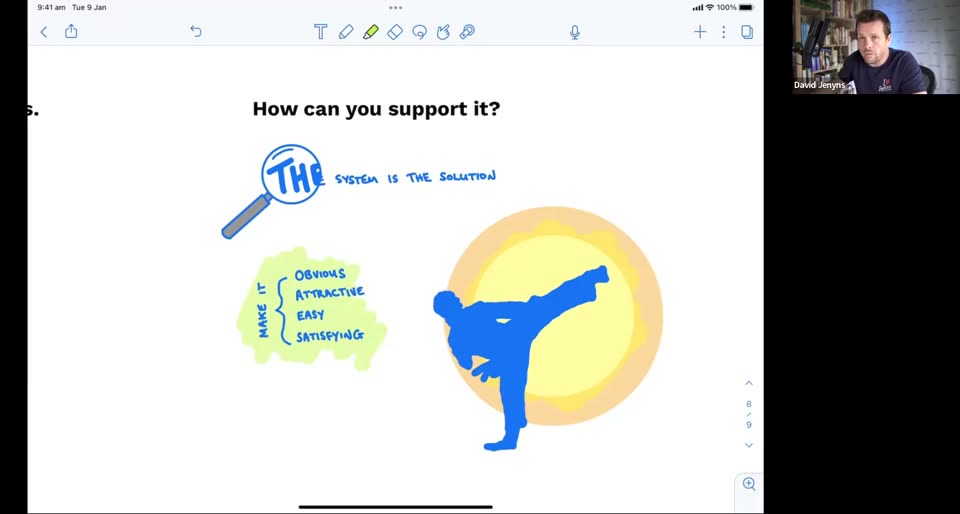
There’s a book called Atomic Habits that’s been useful for us. The author has four rules for building any habit that lasts. We use the same four for getting systems adopted:
- Obvious. The system needs to be easy to find when you need it. If you can’t get to it in 30 seconds, the system is broken.
- Attractive. The path of using the system should be easier than the path of winging it. If it isn’t, the system is too long.
- Easy. Each step should be doable without thinking. Strip anything that needs decoding.
- Satisfying. Following the system should feel like a small win. Ticking the last box. Closing the loop. Knowing it’s done.
The company’s job is to design systems that hit all four. Your job is to flag the ones that don’t.
Quick story. A friend of mine ran a karate gym. End of every shift, the instructors were meant to clean the mats. They never did. He didn’t write a longer policy or yell at anyone. He put a printed checklist on a clipboard, on a hook, right next to the door. Six lines. Took a minute. Adoption hit 100% overnight, because the system was finally obvious and easy. Same humans. Same job. Different design.
Your action plan for the next two weeks
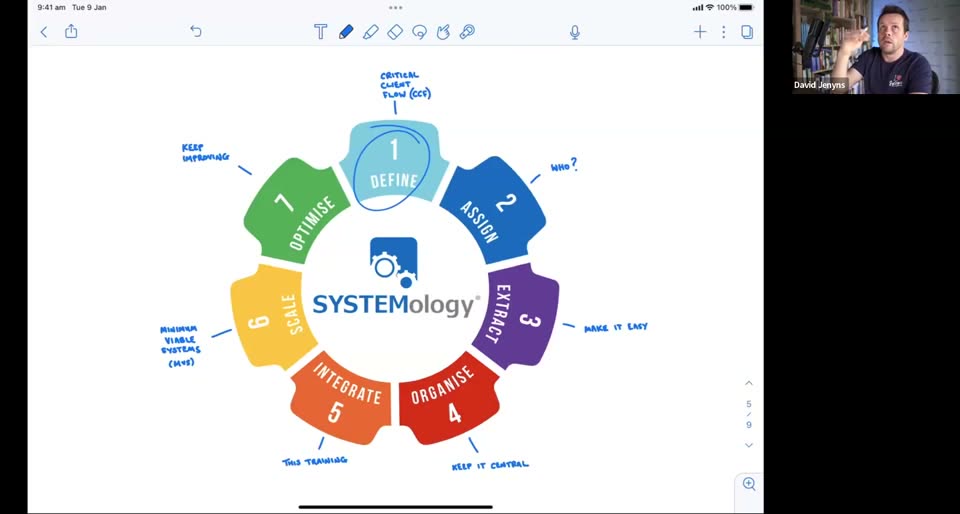
Four things to do.
- Book 30 minutes with your systems champion. They’ll show you our software stack, the system library, and where your role fits. If you don’t know who your champion is, ask the person who shared this page.
- Watch the systems for your first three tasks. Don’t try to learn the whole library. Just the three things you’ll do in week one.
- Take a note every time something isn’t clear. Don’t fix it yet. Just collect the friction. Bring the list to your week-two check-in.
- Find one thing to improve. By the end of week four, you should have spotted one small system that could be better. Suggest the change. That’s how you officially become part of the team.
That’s the induction. Welcome aboard.
For the owner (one more thing)
This conversation is what gets systems out of the SOP library and into the team’s daily working pattern. Run it with every new hire and the difference shows up by month three.
Two ways to use it from here. Keep it free, send the URL, run a debrief afterwards. Or move your systems into systemHUB, which has this induction (and the supporting library structure) baked in. Either path works. The one that doesn’t work is hoping documented systems will adopt themselves.
Want this induction (plus the system library it walks through) inside your business?
systemHUB ships with the BSA training, the system templates, and the structure for your team’s knowledgeable-worker captures.