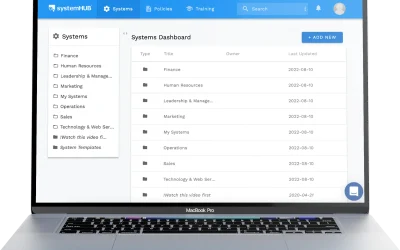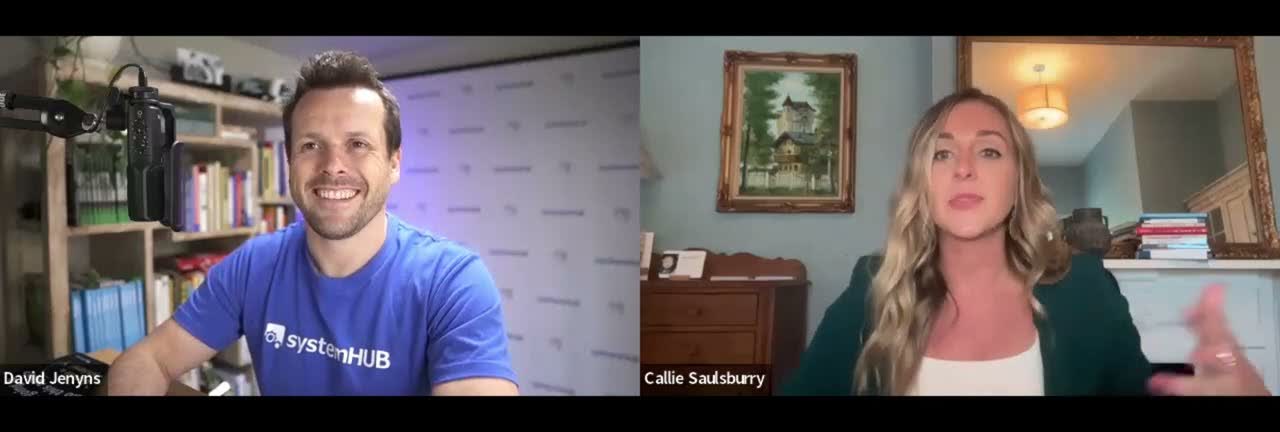
It’s a Tuesday morning in Clarksville, Tennessee. Callie Saulsburry has a pumpkin-cartoon newsletter ready to send to the firm. Two new SOPs went up on systemHUB yesterday. A new hire just emailed her: thanks, I found everything I needed without asking anyone. By 9:30am she’s on a video call with the paralegal team in Hopkinsville, Kentucky, walking them through a probate template she’d updated overnight.
Three years ago, Callie was the firm’s Client Experience Manager. Today she does what almost no business owner can find anyone to do well, and what almost every owner desperately needs. Her actual title is Systems Champion. The generic industry term for what she does is process champion. The work is the same.
This is the case study most articles about the role don’t show you. Not the framework. Not the job description. The actual day-to-day shape of the work, in a real business, told by the person doing it.
My full conversation with Callie about what the role actually looks like, day to day.
The firm she walked into
Crow Estate Planning and Probate is a boutique law firm founded in 2019 by John W. Crow II in Clarksville, Tennessee. They draft wills, trusts, powers of attorney. They handle probate when someone dies. Their slogan: “You have a legacy, let us help you protect it.” When Callie joined, the firm had just two team members. By 2023, fifteen, across three locations in Tennessee and Kentucky.
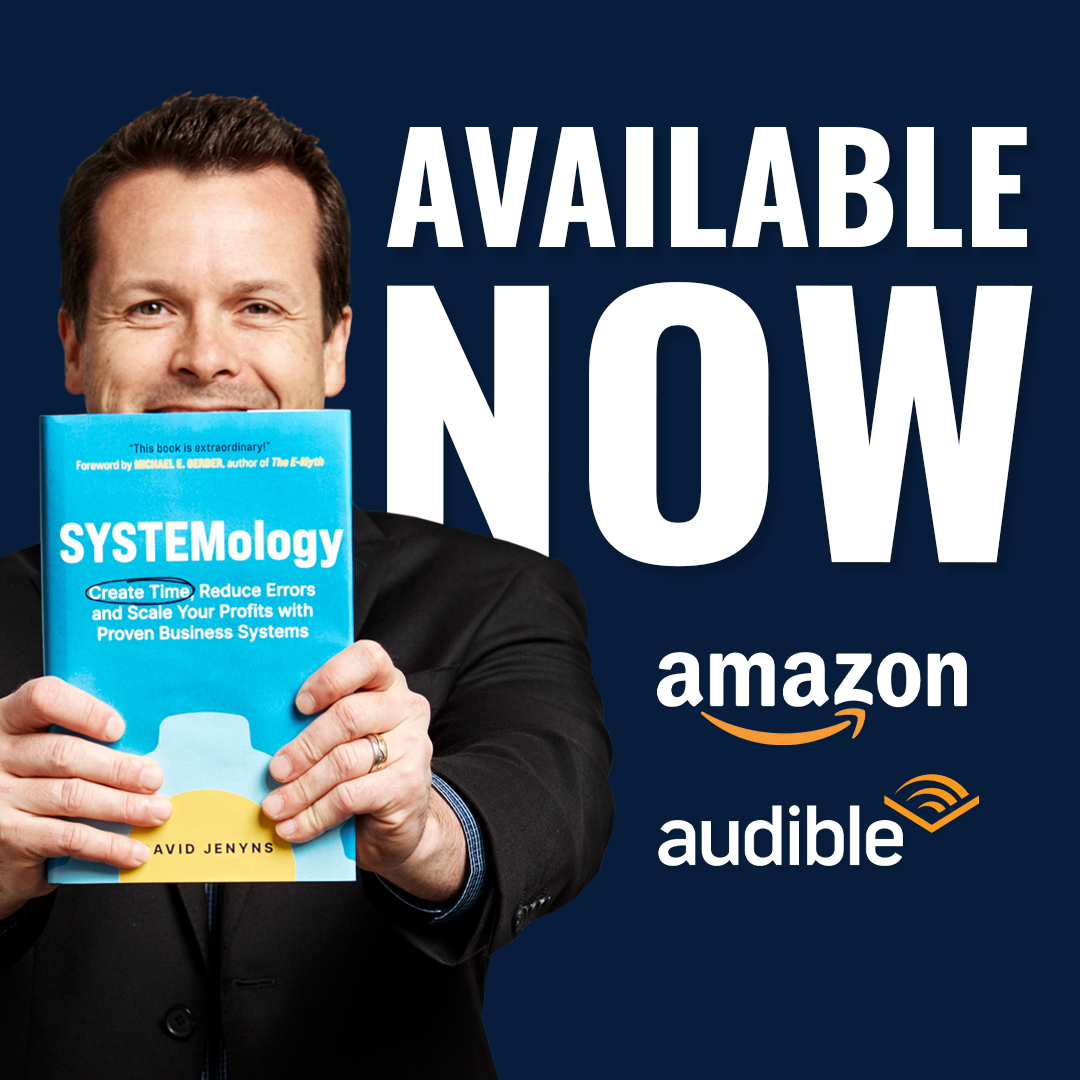
The growth wasn’t an accident. John had a goal he calls a BHAG, a big hairy ambitious goal: a Crow office in every state in the southeast US by 2040. To get there, he knew he couldn’t scale the way most law firms scale, by hiring more attorneys and hoping the work could absorb them. He needed the work itself to be repeatable. He’d read the E-Myth. Then he read SYSTEMology. Then he walked over to Callie’s desk.
“When he first told me he wants to create systems for everything that we do in the office, I was like, ‘Oh my goodness, how am I going to do that?’”Callie Saulsburry
Why John picked an educator
Callie wasn’t an operations expert. She wasn’t a project manager. Before law she was a teacher. She knew how to differentiate learning styles. She knew how to break a complex idea into a sequence a beginner could follow. She knew what it felt like to be on the other side of a confusing instruction.
That last skill turns out to be the rarest one in the room. Most owners looking to staff this role search for an operations manager, or a paralegal who’s good with Notion, or a chief-of-staff type who can run meetings. The hire that actually works often looks more like a teacher. Someone whose default question, when faced with a process they’ve never seen, is: how would I explain this to someone who’s never done it before?
Once you start hiring with that filter, the candidate pool shifts. Former teachers. Former trainers. People who’ve written user manuals, run onboarding programs, or coached junior staff. People who get a small kick out of watching a confused colleague suddenly understand. That’s the wiring you want.
How a process champion handles legal work
Estate planning is procedural. Probate is messier. Every Tennessee county has its own forms and its own quirks. Tennessee has 95 counties. Kentucky adds more. Most law firm owners would look at that variability and conclude their work can’t be systemized.
Callie’s response was to apply SYSTEMology’s Critical Client Flow to the variability itself. She picked the highest-revenue service (estate planning) and documented the full client journey. Once that was done, she turned to probate. Instead of trying to write 95 county-specific procedures at once, she did what a teacher does: started where the most students are. She asked which county they handled the most probate cases for, started there, and worked her way through the rest.
“That CCF is applicable in more than just one way. It really did help me identify this is the county I need to start in, and start my systems in, and then go to the next county, and kind of work my way through all 95.”Callie Saulsburry
Six months later the most common probate paths were documented. The firm could onboard a new paralegal and have them productive on real probate work in days, not months. Single-person dependency, the silent killer of small law firms, was getting smaller every week.
The pumpkin newsletter
One of the things that surprises people about Callie’s role is how much of it is communication. She doesn’t just write SOPs. She markets them inside the firm.
Every month, she sends an internal newsletter announcing the new and updated systems that went live. She makes them fun. In October the newsletter has a cartoon pumpkin with her face on it. “This month I’m a pumpkin, and it’s gonna be all these new systems, come check them out.” December, a snowman. Easter, a bunny. The team waits for it.
That sounds trivial. It’s the opposite. The biggest reason process documentation initiatives fail in small firms is that the team doesn’t notice the new system exists, or notices and quietly resents the extra complexity. Callie understood instinctively, from her teaching days, that adoption is a creative problem. If people aren’t excited to look at the thing, they won’t. So she dressed it up.
She also walks. She drives between offices. The Nashville team is in a different county. The Hopkinsville paralegals are in a different state. Callie shows up in person, talks to people, builds relationships with the knowledgeable workers whose tribal knowledge she’s extracting. The role isn’t a desk job. It’s a field role disguised as a documentation one.
The day the team started asking for systems
This is the moment every owner reading this is trying to predict and most never reach.
For the first six months a process champion is in role, the systems work feels one-directional. The champion writes SOPs. The team uses them when reminded. Adoption is patchy. The champion wonders if anyone’s actually looking at systemHUB or just nodding politely in meetings.
Then, one day, it flips.
“They’ve actually requested some, like, ‘hey, this would be a great idea for assistance.’ And I love that.”Callie Saulsburry
A team member walks past her desk and says “can you build a system for X?” A new hire emails to ask if there’s a video on systemHUB for a specific client scenario. The paralegals start adding to existing SOPs without being asked. The thing has gone from Callie’s job to everyone’s reflex.
That’s the cultural inflection point. Documented procedures became a systems culture. And the moment it happens, the process champion’s job changes. Less time in front of a blank document. More time editing, curating, retiring stale processes, training new contributors. The role compounds.
“Let’s say even a new hire asks a question. ‘I’m unsure how to do that.’ The first thing is, well, there’s a video on systemHUB for it. And I love hearing that, because there is, and it’s a step by step. It’s not interrupting someone else’s workflow.”Callie Saulsburry
What this means for an owner reading this
If you’ve been searching for the person who can systemize your business, the bigger search is for the right wiring, not the right title. The candidate’s resume probably won’t say process champion. It probably won’t even say operations. Callie’s didn’t.
The question to ask in an interview isn’t “have you written SOPs before?” Most candidates will say yes and most will be lying or confused. The question is closer to “tell me about a time you taught a complete beginner something complicated.” The candidate who lights up answering that is the one to keep talking to.
Three other things Callie’s story makes obvious for owners considering this role:
Hire the wiring before the experience. Callie’s teaching background was the load-bearing skill, not her time as Client Experience Manager. The role is closer to internal teaching than to project management. Hire accordingly.
Give them a single first project, not the whole map. Callie didn’t try to systemize estate planning, probate, and business planning at once. She picked the biggest revenue line, applied the CCF, finished it, and moved on. Owners who hand a process champion a 50-system to-do list on day one almost always lose them within a year.
Plan for the inflection. The role looks low-impact for the first six months. The pumpkin newsletter feels like a side hobby. Then suddenly it isn’t. Don’t lose your nerve in month four, when the team hasn’t fully bought in yet. The flip from Callie writes systems to the team requests systems is the entire game, and it doesn’t happen until the documented body of work hits a critical mass.
FAQ
What does a process champion actually do, day to day?
Three things, in rough order of time spent: documenting (interviewing knowledgeable workers, drafting SOPs and checklists, recording walkthrough videos), communicating (newsletters, meetings, inter-office visits, training new hires on the system), and curating (editing existing SOPs as the work changes, retiring obsolete ones, organising the platform so people can find what they need). Callie spends roughly half her time on documentation, the rest on the other two.
How is a process champion different from an operations manager?
An operations manager runs the work. A process champion runs the way the work gets done. The operations manager owns delivery, deadlines, capacity, and team performance. The process champion owns documentation, adoption, and continuous improvement of the documented system. They report into operations, but their job is structurally different. A small firm with one good ops manager still needs a process champion. The two roles don’t collapse cleanly into one.
How big does a business need to be before hiring a process champion?
The sweet spot is roughly 5 to 30 staff with product-market fit and repeat business. Crow Estate Planning hired Callie when they were around 8 staff and growing fast. With fewer than 5 people, the payoff isn’t there yet, the owner can hold the systems work themselves. With more than 30, cultural change is harder and you may need more than one champion.
Does a process champion need legal or industry-specific experience?
No. Callie had no legal background when she started the role. The transferable skills (teaching, organising, asking good questions, communicating) are far more important than domain expertise. Domain knowledge gets picked up by interviewing the firm’s knowledgeable workers, which is how a good champion learns the business anyway.
How long before a process champion pays off?
Six to twelve months for the cultural flip from they write systems to the team asks for them. Twelve to eighteen for the first measurable impact on onboarding speed and reduced single-person dependency. Two to three years to feel like the firm runs differently. Owners who pull the plug at six months almost always do it the month before the inflection.
The real hiring claim
Most owners think they’re looking for an operations person. They’re looking for someone with a clipboard, a tidy mind, and a gift for accountability.
The role they actually need looks more like a teacher.
It’s a person whose first instinct, when handed something complicated, is to ask how would I explain this so a beginner could do it? A person who finds it satisfying to watch someone go from confused to confident. A person who’ll dress up a quarterly newsletter as a pumpkin not because anyone asked them to but because they understand that the team won’t read it otherwise.
Look at your team right now. Is there someone like that already on the payroll, in a role that doesn’t use that wiring? They’re probably the person.
The Systems Champion role, written down
If you’re ready to hire your version of Callie, the Systems Champion book is the playbook for the role. The Systems Champion Academy is the program that trains them once they’re in seat.
About Crow Estate Planning
Crow Estate Planning and Probate, PLC is a boutique law firm founded in 2019 by John W. Crow II. Based in Clarksville, Tennessee with additional offices in Nashville and Hopkinsville, Kentucky, the firm specialises in estate planning, probate, and business planning. John has been recognised in Super Lawyers as a Mid-South Rising Star from 2018 through 2023. Visit johnwcrow.com.