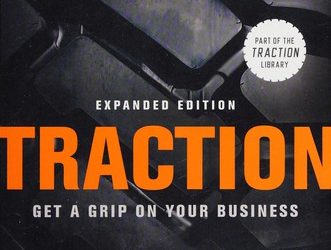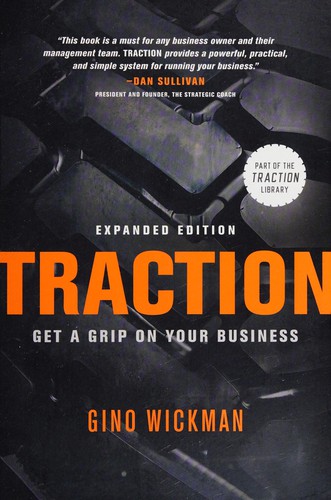
The People Analyzer comes from Gino Wickman’s Traction — the book that introduced the EOS framework. It’s the tool EOS companies use every quarter to answer one question: right person, right seat?
On this page
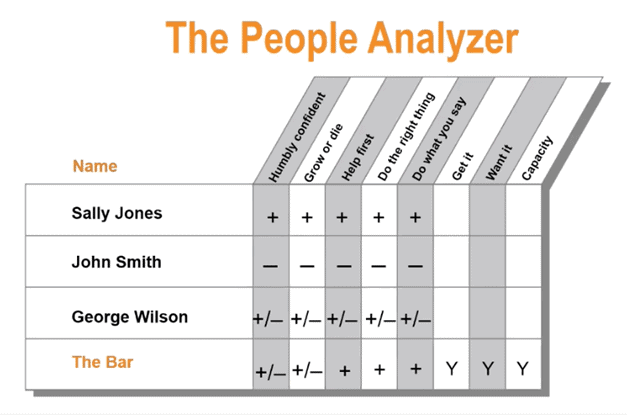
Short answer: The EOS People Analyzer is a simple tool from Gino Wickman’s Traction for scoring every person on your team against two things: the company’s Core Values (rated + / +/- / –) and GWC for their role (Get it, Want it, Capacity — each a Yes or No). If someone scores – on values or No on any of the three GWC questions, you have a people decision to make. This guide walks through the framework, the ratings, the three-strike rule, and gives you a template you can copy into your next quarterly review.
EOS Implementer Daniel Davis walks through the full EOS system. He introduces the People Analyzer at ~17:17 and explains the GWC ratings from ~22:37.
What is the EOS People Analyzer?
The People Analyzer is the tool EOS companies use to answer one question: right person, right seat? It’s a one-page grid. Down the left, every person on your team. Across the top, your Core Values plus three GWC columns. Each cell gets a mark. When you’re done, the picture of your team is obvious.
It’s blunt on purpose. Most teams avoid honest conversations about whether someone fits the role. The People Analyzer forces them. Used quarterly alongside a Level 10 meeting rhythm, it’s how EOS companies keep their people decisions clean.
Gino Wickman calls it one of the most important tools in Traction. It’s also the most avoided. Owners tell me all the time: “I already know who’s struggling, I don’t need the grid.” The grid’s not for knowing — it’s for acting.
GWC: the three questions for every seat
Before Core Values, you check GWC. Three simple questions. Each one a Yes or a No. No middle ground.
G — Get it
Does this person genuinely understand the role? The ins, outs, workflows, nuances, and ripple effects of what they’re being asked to do? If they don’t get it, no amount of training will close the gap. Either they see how the role works, or they don’t.
W — Want it
Do they genuinely want to do the role — including its least glamorous parts? Wanting a title is not the same as wanting the job. Someone who wants to be Head of Ops but doesn’t want the admin, the difficult conversations, or the weekend callouts is a No on Want it.
C — Capacity
Do they have the mental, physical, emotional, time, knowledge, and skill capacity to do it now? Not a year from now with more training. Now. Capacity is the honest-assessment column — it’s where most teams soften the answer and regret it six months later.
A Yes / Yes / Yes on GWC means right seat. One No means wrong seat. Two Nos means the person isn’t even close — and staying in the role will grind them down and damage the business.
The + / +/- / – rating system
Alongside GWC, each person is rated against every Core Value using three symbols. That’s it. Three symbols. No five-point scale, no 360 review, no feedback form.
The power of the system is in its simplicity. No one argues about whether a person is a 3 or a 4 out of 5. They either live the value or they don’t. When every leader in the room rates the same person, the picture is clear very fast.
How to run a People Analyzer session
The People Analyzer runs inside your quarterly leadership offsite — or as a dedicated 90-minute session once a quarter. Here’s the flow that works:
“The people who own the key roles in your business are your leadership team. If they don’t own a key role, they don’t get to be on your leadership team. It’s just that simple.”
— Ben Stickland, on formalising a leadership team before running the People Analyzer
- Confirm your Core Values are clear. If your Core Values are vague or haven’t been revisited in years, stop and clean them up first. You can’t rate someone against a value no one can define.
- Review the roles (seats), not just the people. Use your Accountability Chart so you’re rating each person against the seat they’re in, not the seat they used to hold.
- Rate every person against Core Values first. + / +/– / –. Leaders fill in their view, then discuss.
- Check GWC for each role. G, W, C — yes or no. Any single no is flagged.
- Surface the decisions. Right person, right seat stays. Right person, wrong seat — move them. Wrong person — time to have the conversation.
- Document the outcome. Every line on the analyzer produces an action: keep, coach, move, or exit. Set a 90-day review date.
The whole session, done well, takes 60-90 minutes for a leadership team of 6-10. Longer teams split into departments.
The three-strike rule
When someone scores a – on a Core Value or a No on GWC, EOS uses a simple escalation:
- Strike one: name it. Tell them specifically what you’re seeing and what needs to change. Put a 30-day window on it.
- Strike two: formal warning. Written. Clear gap, clear timeline, clear consequences. Another 30 days.
- Strike three: they’re out.
It sounds harsh. In practice, it’s the most generous thing a business can do for an underperformer — because the alternative is watching someone flail for 18 months, dragging the team down, while nobody has the honest conversation. A clear three-strike process creates urgency and dignity at the same time.
Where the People Analyzer fits in the EOS system
EOS has six components: Vision, People, Data, Issues, Process, and Traction. The People Analyzer sits at the heart of the People component. It’s the diagnostic tool that answers: do we have the right people in the right seats?
It works in rhythm with the rest of the system:
- Your Accountability Chart defines the seats.
- Your Core Values define the bar for “right person”.
- The Level 10 meeting surfaces the people issues weekly (through IDS).
- The People Analyzer resolves them quarterly.
Without the analyzer, the weekly IDS gets clogged with the same recurring people issues because nobody’s named the underlying call.
People Analyzer vs traditional performance reviews
| Traditional performance review | EOS People Analyzer |
|---|---|
| Once a year, often delayed | Every quarter, on the rhythm |
| 5-page document, HR-driven | One page, leadership-driven |
| Numeric 1-5 rating scales | Three symbols: + / +/– / – |
| Rates skills and output | Rates Core Values fit and GWC |
| Aims to be “balanced” | Aims to be honest |
| Produces a salary band | Produces a people decision |
| Backwards-looking | Forward-looking |
The two aren’t mutually exclusive. A good-sized business runs both — the People Analyzer for fit and direction, a lighter performance process for skills development and compensation. But if you had to keep only one, keep the analyzer.
Where SYSTEMology fits with the People Analyzer
A People Analyzer exposes who is — or isn’t — right for a seat. What it doesn’t do is make the seat easier to fill. That’s where SYSTEMology comes in.
Once you’ve identified that someone is in the wrong seat, the fastest way to replace them (or reassign them) is to have the seat’s critical processes documented as SOPs. Otherwise, their role dies with them. A seat with strong documentation is a seat the next person can fill in days instead of months.
Many EOS companies run SYSTEMology underneath their Traction rhythm for exactly this reason: the analyzer gives them the clarity, the SYSTEMology framework gives them the documented processes that make the decision safe to act on.
— David Jenyns, founder of SYSTEMology
Ready to build the documented systems behind every seat?
A People Analyzer tells you who belongs in each seat. It doesn’t make the seat easier to fill. systemHUB is where you document the critical processes behind each role so the business stops depending on the person in it — the missing layer underneath EOS. Grab the canonical People Analyzer template free from eosworldwide.com/eos-toolbox, then use systemHUB to build and store the SOPs behind every seat on your Accountability Chart.
People Analyzer FAQ
What is the EOS People Analyzer?
The EOS People Analyzer is a one-page tool from Gino Wickman’s Traction that scores every person on your team against your company’s Core Values (+ / +/– / –) and GWC for their role (Get it, Want it, Capacity — yes/no). It’s used to answer whether you have the right people in the right seats.
What does GWC stand for?
GWC stands for Get it, Want it, Capacity. Each is a yes or no question asked about a person in a specific seat. Get it = do they understand the role? Want it = do they genuinely want to do it? Capacity = do they have the mental, physical, time, knowledge, and skill capacity to do it now? A No on any of the three means wrong seat.
How often should we run the People Analyzer?
Quarterly. Most EOS companies run it inside their quarterly leadership offsite. Running it more often burns the team out; running it less often means issues fester.
What’s the three-strike rule?
When someone scores a – on a Core Value or a No on GWC, EOS uses a three-strike escalation. Strike one: name the gap with a 30-day window. Strike two: formal written warning, 30 more days. Strike three: they’re out. It creates urgency and fairness at the same time.
Can I use the People Analyzer without full EOS?
Yes. Plenty of companies use the People Analyzer as a standalone tool alongside a different operating system. You just need clear Core Values and a defined role (seat) for each person. It’s most powerful inside the full EOS rhythm, but it works on its own.
What’s the difference between the People Analyzer and a performance review?
Performance reviews rate skills and output on numeric scales, usually once a year, usually tied to compensation. The People Analyzer rates Core Values fit and GWC using three symbols, quarterly, to produce a people decision (keep, coach, move, or exit). They’re complementary.
Where can I download an EOS People Analyzer template?
The canonical free version is in Gino Wickman’s EOS Toolbox at eosworldwide.com/eos-toolbox. For a version with the Level 10 meeting agenda, Accountability Chart, VTO, and scorecard templates built alongside it, start a free systemHUB trial.
What if someone is a + on values but a No on GWC?
Right person, wrong seat. That’s a move decision, not an exit. They fit the culture; they just don’t fit this role. Find them the seat they do fit, or create one if the business can support it.
Is the People Analyzer the same as a 9-box grid?
No. The 9-box grid rates people on performance and potential. The People Analyzer rates them on Core Values fit and role fit (GWC). Different questions, different decisions. The People Analyzer is specifically an EOS tool; the 9-box is from General Electric’s succession-planning tradition.