You spend months and real money winning a customer. Then, somewhere around the third or fourth month, they go quiet and never come back. Most owners do not notice until the revenue gap shows up on the P&L, by which time the trail has gone cold.
Joey Coleman has spent nearly two decades on that leak. In this episode he sits down with David Jenyns to work through the customer retention systems that turn one-time buyers into lifelong raving fans. He is blunt about where the money is: not in the next lead, but in the first 100 days of the relationship you already have. Churn research by industry, the eight emotional phases of a customer journey, the right moment to ask for a referral and why AI will not save a business that has never written anything down. Worth an hour if you are still spending more on finding customers than on the customer experience that keeps them.



Key Takeaways
- Selling to someone who already bought is three times easier. Cold prospects convert at about 20% across industries. Existing customers sit at 60 to 70%.
- Between 20% and 70% of new customers quit before day 100. The range depends on your industry and almost no owner can name their own number.
- Get those 100 days right and the customer stays five years. That is the payoff Joey’s research points to, from a single window at the start of the relationship.
- Audit what you do now before you change anything. Joey has mapped customer journeys on all seven continents and never met anyone who could list every step their own business takes.
- Ask for the referral after the customer gets the result. Not at signup, not at thirty days. After they hit the goal they bought you for.
- AI magnifies the business you already are. Point it at an undocumented business and it amplifies the mess rather than fixing it.
In This Episode
- 02:15 Why Joey thought systems people were boring
- 04:45 Owners come to systems from overwhelm
- 07:30 The emergency room argument for systems
- 09:45 Keeping a customer beats finding one
- 11:15 The retention budget nobody can name
- 16:15 Where the first 100 days research began
- 20:45 The eight phases of the customer journey
- 27:18 Three retention metrics any business can track
- 31:30 When to ask for a referral
- 41:30 AI magnifies the business you already are
👤 Today’s Guest, Joey Coleman
For nearly two decades Joey Coleman has helped organisations turn one-time buyers into lifelong raving fans by focusing on what happens after the sale. He is the Chief Experience Composer at Design Symphony, an award-winning speaker and the bestselling author of Never Lose a Customer Again and Never Lose an Employee Again.
A recovering attorney, he builds everything on evidence rather than opinion. He has run his customer journey mapping exercise with businesses on all seven continents. He describes himself as someone still working to become more of a systems person, which makes him unusually honest company on the subject.
Website: joeycoleman.com
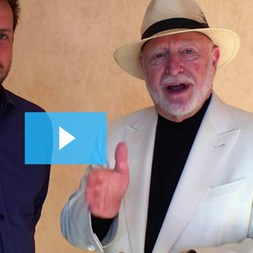
Prefer to Watch? Full Video Below
📋 Customer Retention Systems: What Joey Coleman Does In The First 100 Days
Based on the interview with Joey Coleman, Chief Experience Composer at Design Symphony.
Joey did not arrive at this as a systems person. He says he used to think systems people were the ones you would never invite to a party: everything lined up, nothing fun. What changed his mind was running a business for long enough to notice the trade.
“I actually realized that the more systems you have, the more freedom you have.”
Joey Coleman, 02:45
Most Owners Come To Systems From Overwhelm, Not Ambition
Joey sees two groups arriving at systems thinking. A small one turns up excited about what a well-run business could do. The majority turn up frightened: too many balls in the air, too much slipping through and the back of an envelope no longer holding it. Both end up buying the same software and writing the same checklists, but fear makes for worse decisions than possibility does.
His favourite rebuttal to “my business is too unpredictable to systemise” is the emergency room. It is the most chaotic place in the hospital. Nobody knows what is coming through the door, yet the best ones in the world run on a stack of systems: everything in the same place, restocked, ready. Chaos is exactly why the system exists.
“Great. What else do you lie about?”
Joey Coleman, 08:40
Keeping A Customer Is Three Times Easier Than Winning One
The research behind Never Lose a Customer Again looked at businesses small, medium and large, online and offline, product and service, national and international. Across all of them, a cold prospect converts at roughly 20%. Sell to someone who has already bought from you and that jumps to 60 to 70% depending on the industry. Three times the result, for a fraction of the work.
Then Joey asks the question that catches people out. Most owners can tell you their marketing budget for the year to the penny. Ask the same owner what they have set aside to keep the customers they already have and the answer is usually some version of “we treat them well”. That is not a plan, it is a hope. It is also where the leak starts.
The First 100 Days Decide The Next Five Years
The 100 day idea came out of a banking report. It said 32% of customers leave a brand new bank before the one year mark and half of those go within the first 100 days. Joey found that remarkable given how much paperwork it takes to open an account in the first place. So he went looking at other industries.
| Industry | New customers lost before day 100 |
|---|---|
| Banking | 16% |
| Software as a service | 20% |
| Cell phone | 22% |
| Restaurants | 40 to 70% |
| Auto mechanics | 68% |
What worried him more than the numbers was that almost no owner could name their own. If you do not know what share of your customers leave inside 100 days, you are not tracking your client onboarding process closely enough to fix it. And the objection that your delivery takes longer than 100 days does not get you out of it, because the customer is making the stay or go decision in months one, two and three regardless of when the work finishes.
“Five years if you get the first 100 days. That seems a worthwhile focus to me.”
Joey Coleman, 19:30
How Joey Builds A Retention System
His consulting method is deliberately slow at the start. Four steps, in this order.
1 Map The Journey You Actually Have
He picks someone who believes they understand how the business works, sits them in a chair in the middle of the room and maps every step from the moment a person first hears of the company to the point they are actively making referrals. He has done this on all seven continents across dozens of industries and has never found a single person, solo operators included, who could detail all the steps already happening in their own business.
2 Let The Audit Show You The Gaps
Once the journey is on the wall, the holes are obvious without anyone being clever. Not everyone gets a welcome call. Get Sally and it is great, get Frank and you are in trouble. Nobody has checked in on a customer who has been with you three months. Joey says the audit alone usually produces double-digit opportunities, which is why he refuses to walk in with five things you should be doing before he knows what you do now.
3 Only Then Add New Touch Points
New ideas come last and they are aimed at the specific gaps the map exposed. A check-in call added at the right point lifts both retention and happiness. It works because it was chosen rather than copied. This is also the moment the handover from sales to operations gets written down properly, which is where most of the damage happens on the way to delivery.
4 Re-Run The Whole Thing Every Year
Joey reassesses the eight phases in his own business annually: what worked about the journey last year, what did not, how do we make it better. The job is never finished, which frustrates people who wanted to build it once. It is also the only reason the system keeps matching the business it belongs to.
The Emotions Your Customers Will Never Ask For
Joey’s eight phase model is built on emotion, not admin. In the assess phase a prospect is weighing you up and wants confidence that you have done this before, honesty about how it will work and credibility from other people rather than from you. In the admit phase, when they hand over the money, they want certainty they chose right, excitement that you are as invested as they are and hope that the salesperson was not just talking. Every phase has its own feelings and your touch points either meet them or they do not.
The catch is that nobody will tell you any of this. No customer says “I have just signed up and I need to feel confident in the choice I made”. Joey compares it to being asked by someone who loves you what you really want: most people hedge, because the last time they answered honestly it did not go well. Which is why “we survey our clients and they never complain” is not evidence that anyone is happy.
“A well-taken-care-of customer doesn’t leave. A neglected customer leaves.”
Joey Coleman, 22:45
Could you draw your customer journey right now, start to finish?
Joey puts someone in a chair and maps it on a wall. This does the same job in your browser: every step from first contact to raving fan, laid out so you can see which one nobody owns.
Ask For The Referral After The Win, Not Before
Referrals fail for one of two reasons. Joey thinks most businesses manage both. Either they never ask at all, because no system tells anyone to and most people find asking uncomfortable, or they ask far too early. His example is a restaurant handing you the menu and asking who else you would like to text about booking a table. You have not eaten yet.
The right moment is after the customer has reached the goal they became a customer to reach. Join a gym to lose 15 kilos and the ask belongs at the moment you hit it, not in week one, because until then you are being asked to put your own reputation behind something you are not sure works. If your delivery runs longer than that, educate customers on the milestones along the way and ask at one of those instead, the same way a good accountant marks accurate financials as a win long before tax time. Joey also has a test for anyone who says their business runs on referrals: what percentage, actually? Twelve percent is not a referral business, it is a business with an untapped referral system.
Three Retention Metrics Any Business Can Track
Joey tracks different things across his books, his speaking and his consulting: sales to reviews written for the books, bookings that come off the back of a stage for speaking and whether a client asks what problem we should solve next once the first one is solved. Underneath those he says three measures apply to any business at all.
- Repeat business. How much of this year came from people who bought last year.
- Testimony-worthy behaviour. Whether you are creating moments a customer would willingly put their name to.
- Frequency of referrals. The real number, counted, not the story you tell about it.
He has never met a business that told him it had enough referrals, which makes this the fastest area to improve in most companies.
AI Magnifies The Business You Already Are
Joey is careful here: he thinks AI has real potential and that the benefits are currently oversold. His evidence is a company doing around half a billion dollars in revenue that he sat with a few weeks before recording. The plan was impressive. Before any client call, the system would surface three to five intelligent questions drawn from everything the team had logged about that client.
So he asked the technology lead one question: on a typical client, how many completed notes fields do we have? The room went quiet. There were not enough notes to make any of it worth having. The conversation stopped being about technology and became one about whether people do the job they are supposed to do, which is a systems conversation wearing a different hat.
“AI and money are magnifiers of the underlying object, business, person that is being magnified.”
Joey Coleman, 46:00
Your Employees Are Internal Customers Too
Joey’s second book applies the same eight phases to staff. If pushed, he says employees matter more than customers. The reasoning is practical: you could probably go out and win a customer by the end of the week, but think about the last hire. The CVs, the interviews, the background checks, the months before you trusted them.
Then there is the figure he quotes: 58% of companies spend less than one week training a new hire. We expect those people to still be performing in year four on the strength of five days. A written employee onboarding checklist is the least you can do and the same eight phases apply from there.
You Cannot Hold A Team To A Standard You Never Wrote Down
The closest Joey gets to annoyed is on leaders complaining about their teams. He had a CEO on the phone the morning of the recording, frustrated with performance, so he asked to see the quarterly expectations document. The one where you met with them and set out what high performance looks like, the stretch goals, the base level you need. There was not one. The answer was “they should know”.
How would they know? They did not grow up in your house. If you tell someone your standard, they agree to it and then miss it, you have a real problem to deal with. If you never told them, you have a documentation problem that you are currently treating as a people problem. That is why we keep pointing owners at naming someone to own the documentation rather than hoping it happens.
“If you’re complaining, leader, the problem is with you, not with your team.”
Joey Coleman, 54:15
Where To Start This Week
Do the mapping exercise. Get the people who touch customers into one room, draw every step from first contact to referral on a wall and keep going until the room runs out of steps. Then find the gaps in the first 100 days and fix one. That is a morning’s work and it will tell you more than another quarter of ads.
Joey closes the episode on flossing, of all things. He asked his hygienist what he would need to do to be the best flosser in the practice and only then did he learn anything. There is always a better version of the system you are running and most of us never think to ask for it. The customers slipping away in month three are not telling you they are unhappy. Your business is not broken, your systems are. The first 100 days is the cheapest place to prove it.
Frequently Asked Questions
What is the first 100 days rule?
It is Joey’s finding that customers decide how long they will stay with you inside the first 100 days of the relationship, whatever your delivery timeline looks like. Get that window right and the research points to a customer who stays at least five years. Get it wrong and somewhere between 20% and 70% of new customers are gone before day 100.
Why is keeping a customer cheaper than finding one?
Because the conversion rate is not close. A cold prospect converts at roughly 20% across industries, while someone who has already bought from you converts at 60 to 70%. You have already paid the acquisition cost once, so every further sale to that person starts from a much better position.
What are the eight phases of the customer journey?
Joey’s model runs from the assess phase, where a prospect decides whether to do business with you, through the admit phase, where they commit and hand over money, then on through the rest of the relationship to active advocacy. Each phase has emotions the customer wants to feel and will not articulate, so your job is to design touch points that meet them on purpose.
When should you ask a customer for a referral?
After they have achieved the goal they became a customer to achieve. Ask before that and you are asking someone to stake their reputation on a result they have not seen yet. If your work takes longer than 100 days, set milestones along the way and ask when one of those is reached.
Will AI fix a business with poor systems?
No. Joey is direct about it. AI magnifies whatever is already there, the same way money magnifies whatever kind of person you already are. His example is a half-billion-dollar company whose AI rollout stalled because almost nobody had been filling in the client notes it was meant to read.
Does any of this apply to employees?
The same eight phases apply to your team, which is the subject of his second book. His view is that employees deserve more attention than customers, because you could win a customer this week, while replacing a good employee takes months. He points out that 58% of companies spend less than a week training a new hire.
Ready to get started?
systemHUB gives you 100+ ready-made SOP templates across Sales, Marketing, Operations, HR and Finance. Customise them for your business and start building a business that runs without you.
Thank you for listening!
Thanks for joining us for this episode. Do you have any questions or feedback you'd like to share? We'd love to hear it! Let us know in the comments section below.
If you enjoy listening to this podcast, please share it on Facebook and leave an honest review on iTunes. We'd love to know what you think.
Remember, the next system we share could be just the one you’ve been looking for, so subscribe on iTunes so you can get the latest episodes as soon as they’re published.
About The Show
Business Processes Simplified
We interview industry experts and have them share their best small business systems and processes. This is the quickest, easiest and most efficient way to build a systems centered business.