You know something is off with your team. You just can’t quite put your finger on it.
Tasks fall through the cracks. Good people seem disengaged. You’re still the answer to every question. The business can’t seem to grow past you, no matter how hard everyone works.
And yet the thought of shaking up your team feels terrifying. What if you lose institutional knowledge? What if the disruption makes things worse? What if you make the wrong call?
Here’s what I’ve learned after helping hundreds of business owners restructure their teams: the shake-up itself isn’t the hard part. The hard part is doing it without clear data. When you’re making team decisions based on gut feeling, every change feels like a gamble. But when you have documented systems and clearly defined roles, the right moves become obvious.
In this guide, I’ll show you how to shake up your team the right way. Not by firing everyone and starting over, but by using systems to get the right people in the right seats.
In this guide:
- What does it mean to shake up your team?
- Signs your team needs a shake-up
- Why business owners avoid the shake-up
- How systems create the clarity you need
- The DRTC framework: your team shake-up blueprint
- Making team changes with confidence
- Common mistakes when restructuring your team
- Frequently asked questions
What does it mean to shake up your team?
Let’s clear something up straight away. Shaking up your team doesn’t mean mass firings. It doesn’t mean cleaning house and starting from scratch. That’s the nuclear option, and it’s almost never the right one.
A team shake-up means getting the right people in the right seats. It means looking honestly at your current structure, understanding who owns what, and making the adjustments needed so that everyone is doing the work they’re best at.
Sometimes that means moving someone to a different role. Sometimes it means creating a new role that didn’t exist before. Sometimes it means having an honest conversation about expectations. And yes, sometimes it means parting ways with someone who isn’t the right fit.
The critical difference is this: a reactive shake-up is driven by frustration. A strategic shake-up is driven by clarity. When you systemise your business first, you can see exactly where the gaps are, where the mismatches sit, and what needs to change. The decisions become objective instead of emotional.
The real goal: A team shake-up isn’t about finding someone to blame. It’s about building a structure where everyone can succeed. Systems make that structure visible.
Signs your team needs a shake-up
Most business owners wait too long to restructure their team. They sense something is wrong but can’t articulate what it is. Here are the five clearest signals that it’s time to shake things up.
1. You’re still the answer to every question
If your team can’t make a decision without checking with you first, that’s not loyalty. That’s dependency. As I describe in SYSTEMology, business owners unconsciously train their teams to become dependent on them. Instead of empowering people to solve problems, the owner becomes the knight in shining armour who always saves the day. The result? Your team stops trying, and you feel like you’re running an adult daycare centre.
2. Good people are leaving and average ones stay
A-players want clarity. They want to know what’s expected of them and how they can succeed. When your business lacks defined roles, documented processes, and clear standards, your best people get frustrated and leave. Meanwhile, average team members stick around because the lack of structure lets them fly under the radar. If your best people keep walking out the door, the problem isn’t them.
3. Tasks keep falling through the cracks
When nobody knows who owns a task, everybody assumes someone else is handling it. Balls get dropped. Clients get frustrated. You find yourself picking up the pieces. This is a structural problem, not a people problem. Without clear ownership and documented standard operating procedures, task completion depends on memory and goodwill. Neither scales.
4. Nobody knows who owns what
Ask three team members who is responsible for handling client complaints. If you get three different answers, you have an ownership problem. When responsibilities aren’t clearly assigned, people either duplicate effort or avoid the task entirely. Both waste time and money.
5. Growth has stalled despite more effort
You’re working harder than ever. Your team is busy. But revenue is flat. This is the ceiling that hits when a business outgrows its current structure. The way your team is organised was probably fine when you had five people. At fifteen, it’s holding you back. Restructuring your team isn’t optional at this stage. It’s the only way to break through.
How strong are your team systems right now?
Take the free Systems Strength Test and find out where your delegation, documentation, and team structures stand.
Why business owners avoid the shake-up
If the signs are so clear, why do most business owners wait so long to act? Because a team shake-up is personal. These aren’t just employees. They’re the people who helped you build your business. Some have been with you from the start.
There are three reasons business owners avoid restructuring, even when they know it’s needed.
1. Fear of losing institutional knowledge
When critical processes live in one person’s head, letting that person go (or even moving them) feels like losing part of the business. And without documented systems, it is. This is why systemisation must come before restructuring. When the knowledge lives in the system, it’s no longer trapped in any single person.
2. No objective criteria for making decisions
Without clearly defined roles, responsibilities, and performance standards, every team decision becomes a matter of opinion. You think someone is underperforming, but you can’t point to anything specific. This makes it nearly impossible to have productive conversations. You end up second-guessing yourself instead of acting.
3. Guilt and emotional attachment
You feel responsible for people’s livelihoods. Moving someone to a different role, or letting them go, carries real emotional weight. But here’s the perspective shift: keeping someone in the wrong seat isn’t kindness. It’s unfair to them, to the team, and to the business. When someone is in a role that doesn’t match their strengths, they can’t succeed either. A shake-up done well can be the best thing that ever happened to everyone involved.
How systems create the clarity you need to shake up your team
Here’s the shift that changes everything: systems make team problems visible. Not in a vague “something feels off” way, but in a concrete, documented, undeniable way.
When you build your business systems using the SYSTEMology framework, you create a map of how your business actually works. Who does what. What processes exist. Where the gaps are. Where one person is doing three people’s jobs and where three people are doing one person’s job.
This starts with two foundational tools: the Critical Client Flow (CCF) and the Departments, Responsibilities and Team Chart (DRTC).
The CCF maps the 7 to 12 core systems that take a client from first contact to delivered result. It shows you the essential journey your clients take through your business. Once you can see that journey clearly, you can see exactly who is responsible for each stage and where things break down.
The DRTC takes this further. It breaks your business into departments, assigns responsibilities, identifies department heads, and maps out who holds the knowledge within each area. When you complete this exercise, you’re no longer guessing about your team structure. You can see it.
And when you can see it, you can fix it.

The old way: team decisions based on gut feeling and emotion.

The SYSTEMology way: team decisions backed by documented roles and systems.
The DRTC framework: your team shake-up blueprint
The DRTC (Departments, Responsibilities and Team Chart) is the tool that makes a strategic team shake-up possible. Think of it as an organisation chart, but simpler and more useful. Its purpose is to give you focus and pin down who you need to work with.
Here’s how to use it as your restructuring blueprint.
1
Map
List your departments and assign the key responsibilities under each one.
2
Assign
Name department heads and identify knowledgeable workers for each area.
3
Reveal
Spot the gaps, overlaps, and mismatches that tell you exactly what needs to change.
Step 1: Map your departments and responsibilities
Start by dividing your business into its core departments. A typical breakdown includes marketing, sales, operations, finance, human resources, and management. Don’t overthink the naming. Use whatever makes sense for your business.
Under each department, list the key responsibilities. Cross-reference this with your CCF to make sure every step in your client journey has a department it clearly belongs to. If a responsibility doesn’t have a clear home, that’s your first red flag.
Step 2: Assign department heads and knowledgeable workers
Next, assign a person to lead each department. This doesn’t need to be a formal title change. It’s simply identifying who takes ultimate responsibility when decisions around that department need to be made.
Then identify the knowledgeable workers: the people who actually know how things get done. These are the team members who hold the knowledge you need to capture. As I explain in SYSTEMology, these aren’t always the most senior people. They’re the ones who do the work well and can show others how it’s done.
Here’s the telling part: if the business owner’s name appears at the top of most departments, that’s a signal you need SYSTEMology more than ever. The goal is to remove yourself from those key positions over time.
Step 3: Spot the gaps, overlaps, and mismatches
This is where the DRTC becomes your shake-up blueprint. With everything mapped out, you’ll see three patterns:
- Gaps: Responsibilities with no clear owner. These are the tasks falling through the cracks. You need someone in this seat.
- Overlaps: Multiple people doing the same thing. This creates confusion, duplicated effort, and turf wars. Clarify who owns it.
- Mismatches: People in roles that don’t match their strengths. Maybe your best salesperson is stuck managing operations. Maybe your detail-oriented admin has been pushed into a leadership role they never wanted. These mismatches are the biggest opportunity in a team shake-up.
Key insight: The DRTC doesn’t tell you who to fire. It tells you where the structure is broken. Often the fix is moving someone to a better-fit role, not removing them entirely.
Build the systems that make team clarity possible
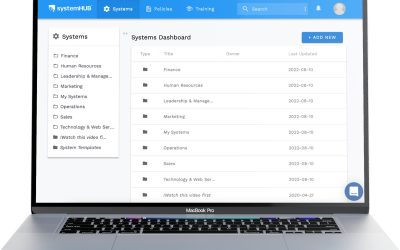
systemHUB gives you a central place to document roles, assign responsibilities, and see exactly who owns what.
Making team changes with confidence
You’ve mapped your departments. You’ve assigned heads and knowledgeable workers. You can see the gaps, overlaps, and mismatches. Now what?
This is where most business owners stall. Seeing the problems is one thing. Acting on them is another. Here’s how to make changes that stick.
1. Start with role adjustments, not terminations
The first move is rarely to let someone go. More often, the right move is to realign. Move people into roles that match their strengths. If your DRTC shows that someone is a knowledgeable worker in operations but they’ve been stuck in a sales role, that’s a mismatch you can fix without losing a good person.
Have the conversation: “I’ve been reviewing how our team is structured, and I think your skills would be better used here.” Most people are relieved. They knew something was off too.
2. Use documented systems as the standard
When you need to address performance, systems give you something concrete to point to. Instead of “I feel like you’re not delivering,” you can say: “Here’s the documented process. Here’s where we’re seeing a gap between the system and the outcome.” That’s not personal. That’s professional.
This is one of the most powerful benefits of delegation done right. When the system holds the standard, conversations about performance become constructive instead of confrontational.
3. When someone needs to go, let the system tell the story
Sometimes a team member simply isn’t the right fit. Maybe their skills don’t match the role. Maybe they resist the systems-centred approach you’re building. This is one of the hardest decisions a business owner makes.
But documented systems make it clearer and fairer. When you have defined responsibilities, clear processes, and measurable outcomes, the evidence speaks for itself. You’re not making a personal judgment. You’re responding to a documented reality.
4. Rebuild with systems-first hiring
Once you’ve shaken things up, you’ll likely need to fill some gaps. This is where your systems become a competitive advantage in hiring. As I write in SYSTEMology: “Average team members like to sneak in under the radar; A-players love a system where they can demonstrate their skills and stand out from the crowd.”
Include links to your documented systems in job descriptions. Add “systems thinking” to your company values. Bake your systemised approach into the onboarding process. You’re effectively saying, upfront: “We have a way of doing things here and you need to be comfortable working in this way.”
The right people will be drawn to that. The wrong people will self-select out. That’s exactly what you want.
From the SYSTEMology book: “Magic happens when you define a clear way of doing things and have the right people executing them to those standards.” That’s the endgame of every team shake-up.
5. Communicate the “why” to the team that remains
After making changes, don’t leave your remaining team in the dark. Share what you’ve done and why. Not the personal details of individual decisions, but the structural reasoning. “We’ve mapped out our departments and responsibilities. We’ve identified where we had gaps and overlaps. Here’s the new structure and here’s how it affects your role.”
When your team understands the logic behind the changes, they feel secure rather than anxious. They see that decisions are based on systems and structure, not politics or favouritism. This is how you get your team to love systems and buy into the new direction.
Common mistakes when restructuring your team
Restructuring based on feelings, not data. “I just feel like they’re not pulling their weight” is not a restructuring strategy. Without documented roles and measurable standards, you’re guessing. Build your DRTC first, then let the evidence guide your decisions.
Changing people without changing systems. If you replace someone without fixing the underlying process, the new person will hit the same problems. The issue is often the system, not the individual. Fix the system first, then assess whether you have the right person in the seat.
Doing it all at once. Overhauling your entire team in one week creates chaos. Make changes in stages. Start with the most critical department, document the systems, realign the roles, and then move to the next. Staged changes are sustainable. Revolution is exhausting.
Failing to communicate the why. Silence breeds anxiety. When team members see changes happening with no explanation, they assume the worst. Be transparent about the structural reasons behind your decisions. People can handle change. What they can’t handle is uncertainty.
Not having documented systems for new hires to follow. You’ve made the hard decisions and created openings. Now you’re hiring replacements into the same undefined roles with the same lack of documentation. That’s a recipe for repeating the cycle. Build the systems before you fill the seat. Your new A-players deserve a clear playbook from day one.
Frequently asked questions
How do I know if my team needs a shake-up or just better systems?
Start with systems. Many team performance issues disappear once roles are clearly defined and processes are documented. Build your DRTC, document your core systems, and then reassess. If gaps remain after the systems are in place, the issue is likely a people-fit problem rather than a structure problem.
What is the DRTC and how does it help with team restructuring?
The DRTC (Departments, Responsibilities and Team Chart) is a SYSTEMology tool that maps your business into departments, assigns responsibilities, identifies department heads, and pinpoints knowledgeable workers. It gives you a clear, visual picture of who does what, which reveals gaps, overlaps, and mismatches in your current team structure.
How do I shake up my team without losing my best people?
A-players want clarity, ownership, and a chance to do meaningful work. When you restructure with systems, you’re giving them exactly that. Communicate the changes transparently, explain the reasoning, and show how the new structure benefits them. A well-executed shake-up often re-energises your best people rather than driving them away.
Should I restructure all at once or in stages?
Always in stages. Start with your most critical department or the area causing the most pain. Document the systems, clarify the roles, make the necessary changes, and let things settle. Then move to the next area. Trying to restructure everything simultaneously overwhelms your team and increases the risk of mistakes.
What if I’m the bottleneck, not my team?
That’s extremely common. Many business owners discover through the DRTC that their own name appears at the top of nearly every department. That’s a dependency problem, not a team problem. The solution is to start delegating authority by documenting your processes, assigning department heads, and gradually removing yourself from day-to-day operations.
How do I have difficult conversations about role changes?
Lead with the system, not with personal criticism. Show the documented structure, point to the gap between the role’s requirements and the current outcomes, and have a constructive conversation about what needs to change. When the system holds the standard, the conversation shifts from “you’re not good enough” to “here’s where the process isn’t working and how we can fix it.”
How does HR management fit into a team shake-up?
Your human resources systems are the foundation for a sustainable shake-up. Documented recruitment processes attract the right people. Onboarding systems set clear expectations from day one. Performance management systems give you the data to make fair decisions. If you don’t have these in place, build them as part of the restructuring process.
The team shake-up you’ve been avoiding might be the best thing you ever do for your business.
Not a reckless overhaul driven by frustration. A strategic restructuring backed by documented systems, clear roles, and honest conversations. When you build the systems first, you can see exactly what needs to change. And when you can see it clearly, you can act with confidence. Start building your team systems in systemHUB today.