You spend weeks finding the right person. You make the offer, they say yes, then you exhale and move on to the next fire. The problem is that the expensive part of hiring is still ahead of you. Everything that new starter learns about how you work and whether they want to stay gets decided in the weeks either side of their first day.
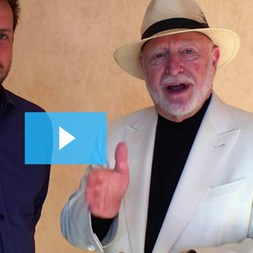
Joey Coleman is back for part two, this time on his second book, Never Lose an Employee Again. Last time he walked us through keeping customers. In this one he maps the eight phases a team member moves through, from reading your job ad to recruiting their friends, then shows what an employee onboarding system has to do at each one. If you have ever lost a good hire and never quite worked out why, press play.



Key Takeaways
- The journey starts with the job ad. A candidate is sizing you up from the first listing they read, so let the real culture come through, including the parts of the job people find hard.
- New hire’s remorse is real. The moment somebody accepts an offer they start second-guessing it. Most employers go quiet in exactly that window.
- The first day on the job is phase four, not phase one. Three phases have already happened by the time a new starter walks in, whether you designed them or not.
- Acclimate them, don’t inundate them. Take what you currently cram into two days of induction and spread it over two weeks instead.
- Let people accomplish something early. Hootsuite has brand new engineers changing the code inside the first week, then makes a moment of it.
- Your most loyal people go invisible. Anniversaries, birthdays and personal milestones are how you make them visible again.
In This Episode
- 01:15 Why losing a team member is one of the most expensive things in business
- 03:00 Why employee experience matters at least as much as customer experience
- 06:30 The eight phases of the employee journey, from first click to advocate
- 09:45 New hire’s remorse, plus the phase most employers skip entirely
- 10:45 Why the first day on the job sits at phase four
- 15:15 Assess tactics: honest job ads and interview questions that predict fit
- 21:15 Making the offer feel like an invitation instead of a legal document
- 29:45 Inside JAM’s first day: walk-on music, a high-five tunnel and a rookie hoodie
- 34:45 The four Rs: role, requirements, responsibilities and relationships
- 39:45 How Hootsuite gets brand new engineers into the code in week one
- 50:15 Why referred team members stay two to three times longer
👤 Today’s Guest, Joey Coleman
Joey Coleman helps organisations keep the customers and the people they have already won. He is the author of Never Lose a Customer Again and Never Lose an Employee Again. He speaks and consults on experience design. This is his second appearance on the show, back by popular demand.
His starting point is straightforward. You cannot deliver a great customer experience without people who actually want to deliver it, so he built the same journey model twice: once for buyers, once for team members. Seven of the eight phases are identical, which tells you something about how humans form loyalty.
Website: joeycoleman.com
📋 The Eight-Phase Employee Onboarding System
Based on the interview with Joey Coleman, author of Never Lose an Employee Again.
Every phase starts with the letter A, which is not an accident. Joey says that getting all eight right is like collecting straight As from your team. Here is the whole journey, from the moment somebody reads your job ad to the moment they start recruiting their friends for you.
“While our customer experience is incredibly important, our team member experience, our employee experience is equally important, arguably maybe even more important, because we need somebody to deliver on those experiences”
Joey Coleman, 03:15
1 Assess
A prospective team member is working you out long before they meet you. They read the job listing, poke around your website looking for something about your culture, check LinkedIn to see who they already know inside your business, then submit a resume and sit through your interview process. They are assessing you at the same time you are assessing them.
What he calls out here are blind job postings, the ones that list a title and a set of duties without ever saying who the company is. Take that description for a project manager and you could hand it to every competitor in town without changing a word.
“The secret in the assess phase is you’ve got to let your brand spirit come through in that first listing”
Joey Coleman, 16:00
So say the good parts of the job and the worst parts. Ask the questions that actually predict whether somebody will thrive in your particular business, not just whether they can do the work. If your whole team goes to the pub every evening, ask about that in the interview. The answer tells you more about fit than another line on a resume will. And let candidates meet the people they will sit next to, not only the person from HR they never see again until they resign. That is a large part of how you hire and retain A players rather than warm bodies.
2 Accept
Two things happen here. You extend an offer and the candidate accepts it. That is the only phase that differs from the customer journey.
His point is about how the offer reads. Most offer letters feel like they were written by the legal department, which he compares to a prenuptial agreement for a marriage. Where is the excitement that made you both decide to do this? An offer should feel like an invitation to the next chapter. It should repeat back the personal and professional goals the candidate told you about in the interview, so they feel seen.
Then when they say yes, make something of it. A video from the team. A package to their house with a gift card so they can take their family out to dinner. Anything other than an automated email confirming a start date.
3 Affirm
Most people have heard of buyer’s remorse. Fewer have heard of new hire’s remorse, which Joey says is the exact same thing and scientifically proven. The moment somebody accepts a job they start pulling the decision apart. I should have negotiated harder. I never met the actual team. What have I done?
Meanwhile you are back at the office high-fiving because they said yes. That gap between the acceptance and the first day is the affirm phase. In most businesses absolutely nothing happens in it. He sets the bar deliberately low: any communication beats no communication. An email, a phone call, a short video, a care package. Something that says we are still excited you are coming.
4 Activate
Day one. Note that it is the fourth phase, not the first. Three phases have already happened by the time somebody walks through your door. You either designed them or you didn’t.
Every new starter goes home at the end of that first day and gets asked the same question by whoever they love most: how was it?
“You should be intentionally designing how your new hire is going to answer that question at the end of the first day”
Joey Coleman, 27:45
The usual answer is grim. The manager was on holiday. Twenty minutes in the lobby. Paperwork, then harassment videos filmed in the seventies, then a lunch with colleagues who were roped into it at the last minute, then home early because IT never set up the laptop.
What JAM does instead
JAM is a company outside Toronto that runs sports leagues for young professionals. New starters begin at 10:00am, an hour after everyone else, so the only car pulling into the lot at that time is the new person. Their manager is waiting in the car park to open their door.
They walk to the front door and their walk-on music plays, the song they nominated in the application when asked what they would walk out to as a professional athlete. Nobody mentioned it again until this moment. Inside, the whole team is lined up in a tunnel, high-fiving and calling their name, wearing either a hockey sweater with the company logo and the year they joined as their number, or a rookie hoodie if they are still inside their first year. Round the corner, the CEO is high-fiving too. Every JAM employee in the country is on a Zoom call with cameras on, cheering.
Then they ask a few questions about who this person actually is: what are you binge-watching, what is the best book you have read, which three people from history would you have dinner with. Then they hand over the rookie hoodie, which gets worn at every team meeting until the one-year anniversary, when it is swapped for the hockey sweater.
That is the first 20 minutes, and Joey’s point is that all it took was a little intention and effort. The 10:00am start does the heavy lifting, because it guarantees the team is assembled and the right car is arriving.
5 Acclimate
Starts on day two, runs for weeks or months. Four things every new person has to understand. Joey calls them the four Rs.
- Role. What is my job and how does what I do feed the rest of the team and the rest of the business?
- Requirements. What are you counting on me to do that nobody else will do if I don’t?
- Responsibilities. The less tangible expectations. Attitude, timeliness, work ethic, pitching in.
- Relationships. Who are my teammates, who is my boss, who is my boss’s boss, who do I deal with in other departments?
The mistake almost everybody makes is trying to cover all four in under two days. Joey has a fix that costs nothing: take exactly what you currently do in the first two days and do it over two weeks instead. That alone solves most acclimate problems, because people fail here for a very human reason. They are drowning, they do not want to look stupid, so they never say “slow down, you just used five acronyms and I don’t know any of them.”
“Acclimate them, don’t inundate them”
Joey Coleman, 39:15
This is also where documentation earns its keep. If the answers live in a documented onboarding system rather than in the heads of whoever happens to be free, a new person can go back over things four times without ever having to admit they forgot.
6 Accomplish
People do not take a job just for the pay. Joey calls the salary the ante that gets you a seat at the table. They took the job for a bigger reason: new skills, a new title, more responsibility, something better than where they were. The accomplish phase is when they hit that. The question is whether anyone noticed.
Hootsuite is his example. Software companies have an unwritten rule that new people do not touch the code. At Hootsuite, new engineers go into the code and make a change in their first week, sometimes on day one. Not a revolution, they add their name or change a colour, but it is a real change to the product. Then the team celebrates it.
Fifty years ago somebody would wait years for a first meaningful win. Joey’s read on today is blunter: if a new team member doesn’t feel like they are contributing on roughly a monthly basis, they are already looking elsewhere.
Not sure what your first 100 days should actually cover?
Our onboarding checklist sets out what to cover, who owns each piece and when it happens, so a new starter’s first weeks stop depending on somebody’s memory.
7 Adopt
An adopter is loyal to you and only you. The headhunter calls and they don’t pick up. A competitor opens across town and they are not interested.
Which is exactly why businesses take them for granted. He says the opportunity in this phase is to make the invisible people visible again. He tells a story about a doctor who ran a group of practices. One of his doctors stopped him in the corridor and asked if he knew what day it was. He didn’t. It was her seventh anniversary at the practice. He called it horrible. Joey called it useful, because now the man could feel the gap.
The fix starts embarrassingly small. Put every start date in your calendar. Then build out what each anniversary means, the way wedding anniversaries run from paper to gold. Birthdays, new babies, a child finishing school. And for anyone worried they have already missed six or seven years of this for their longest-serving people, Joey has an answer.
“Let’s not allow past non-performance to justify future non-performance”
Joey Coleman, 46:00
8 Advocate
The last phase. You only reach it through the seventh. An advocate writes reviews on Glassdoor without being asked and actively recruits the best people they have ever worked with.
Two things break it. The first is that your team has no idea you are hiring. Joey cites research showing more than half of employees do not know when their own organisation has a vacancy open. The second is what happens after a referral. Somebody puts forward a friend, the resume disappears into the process, nobody ever tells them how it went and they are left chasing their own company for an update. Ask that person why they bothered advocating and they will not have an answer.
Keep the referrer in the loop whether you hire the person or not. Thank them either way. Joey mentions a major software company in India that ran a referral program properly and found that direct referrals from existing team stayed two to three times longer than people who arrived through job postings, want ads or recruiters. Loyalty breeds loyalty.
Hire the human, teach the job
One theme runs under all eight phases. Most owners hire someone who can already do the job, when the better bet is to hire someone who fits the culture and teach them the job.
Joey’s reasoning is hard to argue with. Nobody is born knowing how to do anything. Everyone in your business learned the job they do. Even the ones who came from a competitor had to learn your process and your way of operating. What you cannot teach is whether somebody is decent, whether they will roll their sleeves up when a deadline is tight, whether you would want to have lunch with them. He has had far more success hiring good humans and teaching them the work than hiring relevant experience and trying to fix the human.
Where your systems fit
Here is the part that matters for a systems-driven business. Every one of those eight phases is a moment that either happens on purpose or happens by accident. The difference between the two is documentation. JAM’s first day is not magic. It is a system: a 10:00am start, a question asked during the application, a hoodie ordered in advance, a manager who knows to be standing in the car park. Any of those falls over the first time the person who remembers it is on leave.
Recruitment and onboarding are also the one place where the usual rule flips. Normally you capture what you are currently doing, not what you would like to be doing. Here you design it from the ground up, because there is often nothing written down to capture. Build it once, write it down, then work on getting your team to actually use the systems you build.
If you want a second angle on this, Brad Giles covered similar ground on improving your onboarding process in an earlier episode.
Get this right and they stop leaving
Losing a good person is expensive twice over. You pay to replace them, then you pay again for everything they knew that nobody wrote down. Joey’s eight phases are really a map of where that loss gets decided. Almost all of it is decided early.
Pick the phase you are weakest at and design it properly. Keep going, phase by phase, until your team is the one saying, “This is how we do things here.”
Frequently Asked Questions
What are the eight phases of the employee journey?
Assess, accept, affirm, activate, acclimate, accomplish, adopt and advocate. They all start with the letter A on purpose, because getting them all right is like getting straight As from your team. Seven of the eight match Joey’s customer journey exactly. Accept is the only one unique to employees.
What is new hire’s remorse?
It is buyer’s remorse for a job. The moment someone accepts an offer they start doubting the decision, wondering whether they should have negotiated harder or met the team first. Joey says it is scientifically proven, it is normal and it happens while the employer is still celebrating.
Why is the first day on the job phase four and not phase one?
Because three phases have already run their course before anyone arrives. The candidate assessed you, accepted your offer, then spent the gap before their start date either hearing from you or hearing nothing. Most employers only start paying attention on day one, which is already late.
How long should onboarding actually take?
Longer than you are giving it. Joey’s simplest fix is to take everything you currently squeeze into the first two days and spread it across two weeks. The acclimate phase can reasonably run for weeks or months depending on the role.
What are the four Rs of the acclimate phase?
Role, requirements, responsibilities and relationships. Role is what the job is and how it feeds the wider business. Requirements are the things nobody else will do if this person doesn’t. Responsibilities are the softer expectations like attitude and reliability. Relationships are who they need to work with to succeed.
Do employee referrals really make a difference?
Joey points to a major software company in India whose referred hires stayed two to three times longer than people who came through job ads, headhunters or recruiters. The catch is that most teams do not even know when a role is open. Referrers often never hear what happened to the person they put forward.
Ready to get started?
systemHUB gives you 100+ ready-made SOP templates across Sales, Marketing, Operations, HR and Finance. Customise them for your business and start building a business that runs without you.
Thank you for listening!
Thanks for joining us for this episode. Do you have any questions or feedback you'd like to share? We'd love to hear it! Let us know in the comments section below.
If you enjoy listening to this podcast, please share it on Facebook and leave an honest review on iTunes. We'd love to know what you think.
Remember, the next system we share could be just the one you’ve been looking for, so subscribe on iTunes so you can get the latest episodes as soon as they’re published.
About The Show
Business Processes Simplified
We interview industry experts and have them share their best small business systems and processes. This is the quickest, easiest and most efficient way to build a systems centered business.