You wrote the process down. Your team followed it. Then a client rang with a situation the process never imagined and everyone froze. That gap, the one between step four and real life, is where a lot of well-systemised businesses quietly come unstuck.
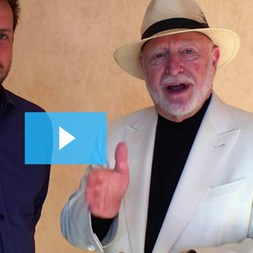
Bob Burg has spent 30 years working on the layer that sits above the steps. He is the co-author of The Go-Giver, a short parable about a struggling salesman named Joe that has sold more than a million copies and been translated into over 30 languages. In this episode he takes Dave through the five laws of stratospheric success, why he calls a system a servant rather than a master and what your team falls back on when the next step doesn’t fit. If your processes keep meeting situations they were never written for, press play.



Key Takeaways
- A system is a servant, not a master. Bob’s line is that a system exists to support the person and the business. The trouble starts the moment a business flips that around.
- Values are the layer above the steps. When the documented step doesn’t match the situation in front of your team, what they default to is what you believe, not what you wrote.
- Giving is the profitable position, not just the noble one. Shifting your focus from getting to giving means constantly providing immense value to others, which Bob argues is also the soundest way to trade.
- Price and value are two different things. Price is a dollar amount. Value is what the thing is worth to the person receiving it, which is why both sides can profit from the same exchange.
- You can’t interview your way to a go-giver. Anyone can answer the way they know you want them to answer, so Bob leans on his network for recommendations instead.
- Team or systems is the wrong question. Great people without a system only go so far. A great system without the right people only goes so far too. Bob refuses to pick one.
In This Episode
- 02:00 The bookstore moment
- 03:45 What Bob means by a system
- 05:14 The system is a servant, not a master
- 07:06 From getting to giving
- 08:52 Law 1: Value
- 10:09 Law 2: Compensation
- 10:37 Law 3: Influence
- 12:12 Law 4: Authenticity
- 15:04 Law 5: Receptivity
- 17:38 Spotting a go-giver before you hire
- 21:19 The right seat on the bus
- 26:45 Team or systems?
👤 Today’s Guest, Bob Burg
Bob Burg is the co-author, with John David Mann, of The Go-Giver. It is a short parable about a struggling salesman named Joe who meets a series of mentors and picks up five laws that change the way he thinks about business. More than a million copies have sold. It has been translated into over 30 languages and Inc. magazine ranks it among the most motivational business books ever written.
He came to it the hard way. Bob started in sales roughly 40 years ago with no experience and no useful training, floundered for three months, then taught himself out of a couple of books he found in a bookstore. He has spent the past 30 years showing entrepreneurs and leaders how to communicate their value and build a business on the back of it.
Website: burg.com
📋 The Five Laws of Stratospheric Success and Where Your Systems Fit
Based on the interview with Bob Burg, co-author of The Go-Giver.
Dave opened by asking whether Bob considers himself a systems person. The answer was yes and the reason why is the best entry point into everything that follows.
What Bob means by a system
Bob had no sales experience when he started out. The place he worked didn’t appear to have much either. Their sales training, as he tells it, was go out, talk to people, sell stuff. He floundered for three months. This was 40 or so years ago, before sales training was available to the masses the way it is now.
Then one frustrated day he walked into a bookstore, found two books on selling by two of the legends of that world and thought, there is actually a way to do this. He got them home and, as he puts it, didn’t read them but devoured them. Study, highlight, take notes, practise, drill, rehearse. Within a few weeks his sales went through the roof. Nothing significant about him had changed. He simply had a methodology.
His own definition of a system is the process of predictably achieving a goal based on a logical and specific set of how-to principles, with predictability doing the heavy lifting. Prove that doing A gets you B, then keep doing A. He then handed the definition straight back to Dave and said he liked his better: a series of steps that when followed create a consistent outcome. Same idea, fewer words, easier to remember.
The system is a servant, not a master
Dave put the layering question to him. Systems are the step-by-step processes you follow. Sometimes you’re in a situation where the next step doesn’t quite match where you are. So what do you fall back on? His answer is the level above: your values, or in Bob’s language, the laws. Embody those and your team has somewhere safe to land when the process runs out.
Bob agreed, then sharpened it. The system shouldn’t be in charge. It’s there to support the person, the business and the process. Where owners get into trouble is when they put the system ahead of the people.
“You’ve gotta be the person that programs the system and makes the system work for you. You don’t work for the system.”
Bob Burg, 06:30
He puts AI in the same bracket. A wonderful tool and a fast way into trouble the moment you start thinking it’s going to build your relationships for you. That distinction is also why getting your team to love business systems works so much better than enforcing them. Dave’s summary of it: the values and the laws become the DNA of the business and that DNA gets imprinted into the process.
The premise: from getting to giving
Before the laws, the premise. Shift your focus from getting to giving, where giving means constantly and consistently providing immense value to others.
Bob heads off the woo before anyone reaches for it. There’s nothing magical or mystical about it. It’s logical and it runs on the better parts of human nature. Take the focus off yourself, put it on discovering what somebody needs and wants, make it about moving them closer to happiness and people want to be in a relationship with you, buy from you and recommend you. He calls those people your personal walking ambassadors.
He and John David Mann called the framework the five laws of stratospheric success. They are careful to say they invented none of it. These are principles, around for as long as there have been market economies. All the two of them did was give them names.
1 The Law of Value
The first one sounds like a recipe for bankruptcy when you first hear it, which is exactly why the price and value distinction matters.
“your true worth is determined by how much more you give in value than you take in payment”
Bob Burg, 08:52
Price is a dollar amount. It’s finite. It simply is what it is. Value is the relative worth or desirability of a thing to the end user or beholder. The question is what it is about this product, service, concept or idea that brings so much worth to another person that they will willingly hand over their money for it and be glad they did, while you make a very healthy profit.
Which is why Bob says every market-based exchange should produce at least two profits. The buyer profits and the seller profits, because both walk away better off than they were beforehand.
2 The Law of Compensation
Your income is determined by how many people you serve and how well you serve them. This is the law where Bob’s world and Dave’s meet most obviously.
Serving one person exceptionally well is law one. Serving a great many of them that well is a systems problem. You don’t get there by working harder. You get there by building something repeatable that holds the standard while the numbers climb.
3 The Law of Influence
Your influence is determined by how abundantly you place other people’s interests first. Bob qualifies it on the spot: this doesn’t mean being anybody’s doormat, a martyr or self-sacrificial in any way. It’s the golden rule of business, the one Joe picks up from the mentors in the story.
All things being equal, people will do business with and refer business to those people they know and trust. There’s no faster or more effective way to earn that than genuinely moving from an I focus to an other focus and it happens to be the quiet engine behind generating referrals for your business. Sam, one of the mentors, gives Joe the line to remember it by: make your win all about the other person’s win.
4 The Law of Authenticity
Deborah, another of the mentors, teaches Joe that all the skills in the world, sales skills, technical skills, people skills, count for nothing if you don’t come at it from your true authentic core. Show up as yourself day after day, week after week and people don’t only feel good about you. They feel comfortable and safe, because they know who they’re getting.
Bob spends a while on a misunderstanding he has watched grow since social media arrived, where authenticity gets treated as an absence of boundaries. Say what you want, act as rude as you want, because that is just being authentic. He respectfully disagrees, using the example of somebody who yells at people and defends it as who they are. His read is that this person has an authentic problem they need to authentically work on.
“my very, very basic definition of authenticity is simply acting congruently with your values”
Bob Burg, 14:49
For a business, that single line is the whole argument for writing down what you stand for before you write down what you do.
5 The Law of Receptivity
The key to effective giving is to stay open to receiving. Bob uses breathing to make it stick. You breathe out carbon dioxide, you breathe in oxygen. Giving and receiving are two sides of the same coin and they work in tandem.
He notes that the world tends to be fairly anti-prosperity, quick to assume anyone earning well must have done something wrong along the way. His counter is economic rather than moral. In an economy where nobody is forced to do business with you, the only way to earn a lot of money is to give great value to a lot of people. Otherwise why would they buy from you?
“nobody’s gonna buy from you because you have a quota to meet. They do things for their reasons, not our reasons.”
Bob Burg, 16:29
Could your team name what your business actually stands for?
Work out the handful of values your team already lives by, so there is something real for them to fall back on when the written step does not fit.
It starts with the owner, then it becomes culture
Dave’s read is that this has to start with the man in the mirror and Bob agreed without hesitating. Success in business is all about pleasing others. People buy because they believe they will get some value from it and they buy for their reasons rather than yours, so the job is finding customers to please. But it begins with the owner’s core values and that’s where the culture of a company comes from.
Which raises the practical question Dave asked next. Once an owner is clear on that, how do you find other people who already live it?
You can’t interview your way to a go-giver
Bob’s honest answer is that you probably can’t spot one in an interview. We have all interviewed someone who looked right on paper, answered every question the right way and turned out to be somebody else once they started. Anybody can answer how they know you want them to answer.
So he doesn’t lean on clever questions. He leans on relationships: a network of people he can go to and ask whether they know someone with that mentality. It’s slower than posting a job ad and a great deal more reliable and it’s close to how most owners end up managing to hire and retain A players.
Right seat on the bus, not a different person
Bob owned up to a mistake from early in his career. He wanted people to be a certain way so badly that he was disappointed in them when they were not, rather than allowing them to be who they are and, in Jim Collins’ language, putting them in the right seat on the bus.
That’s not a free pass on standards. He’s clear that a firm needs a general culture with non-negotiables in it: the way you treat people, the customer experience, the way you treat one another, no gossiping, helping each other out. Inside those, people go about things in their own way and a team fits together like a jigsaw puzzle when the pieces are placed properly.
A friend and colleague of his uses the Kolbe Index with leadership teams for exactly that purpose. Bob’s careful to point out it’s an index rather than a test. The point is understanding and respecting individual strengths, seeing clearly where the weaknesses are and giving up on turning a weakness into a strength. You can mitigate a weakness. You build on the strengths.
Dave added the hiring version. Get clear on the non-negotiables first, because values sit deep in a person and aren’t easy to change, so hire for those. Then work out how somebody actually operates and whether they fill a gap in the mix. Process handles the rest: when a new person doesn’t know how to do something and you show them how it’s done here, that’s the version that gets imprinted.
His last distinction is a useful one for anyone stuck with an existing team. Some people will do wonderfully whatever you direct them to do and will never see the thing coming around the corner. Others go looking for it. Neither is a bad person. It’s simply how their minds work and getting frustrated with the first type for not being the second wastes everybody’s time. You either find a place where they work effectively, lovingly let them go to another opportunity, or accept who they are because the quality of what they do makes the benefit greater than the cost. Annie Hyman Pratt covered the people part of the process from a different angle in an earlier episode.
Team or systems? Bob will not choose
Dave finished with the question he likes putting to guests. If you had to leave a million-dollar business tomorrow and never come back and you could leave behind either the team or the systems, which would you choose?
Bob called it a treacherous dichotomy and refused to split them.
“You can have a great group of wonderfully talented people, but without a system, they’re only gonna go so far.”
Bob Burg, 27:30
The reverse holds just as firmly. Each one gets you to a certain level on its own. Neither gets you anywhere near the level the two of them reach together.
Give them something to fall back on
That gap between the written step and the situation actually in front of your team never fully closes. What changes is what they reach for when they hit it. Write down what you stand for before you write down what you do, then let your systems carry the repeatable part so your people are free for the bit only they can do. Pick the law you’re weakest on this week and build one system that makes it the default.
Frequently Asked Questions
What are the five laws of stratospheric success?
Value, compensation, influence, authenticity and receptivity. Bob Burg and his co-author John David Mann named them in The Go-Giver, but they are quick to say they invented none of it. These are principles that have been around for as long as there have been market economies.
What is the law of value?
Your true worth is determined by how much more you give in value than you take in payment. It sounds like a recipe for bankruptcy until you separate the two words. A price is fixed and finite. What the thing is worth to the buyer is neither, which is how a single exchange can leave both sides better off.
Does being a go-giver mean giving your work away?
No. Bob’s direct about it. Placing other people’s interests first doesn’t mean being anybody’s doormat, a martyr or self-sacrificial in any way. The law of receptivity exists precisely to make the point that staying open to receiving is half of the equation.
How does The Go-Giver relate to business systems?
Bob’s position is that a system is a servant rather than a master. Its job is to hold up the people running it, not the other way round. Your values sit above it, so when a documented step doesn’t match the situation, your team defaults to what the business believes instead of freezing.
What is Bob Burg’s definition of a system?
The process of predictably achieving a goal based on a logical and specific set of how-to principles, with predictability as the key. He then said he prefers Dave’s shorter version: a series of steps that when followed create a consistent outcome.
Can you tell in an interview whether someone is a go-giver?
Bob doesn’t think so. Candidates give you the answers they can tell you are hoping for, which is why most of us have hired someone who interviewed perfectly and turned out differently once they started. He’d rather ask his network for a recommendation, which is slower and considerably more reliable.
Ready to get started?
systemHUB gives you 100+ ready-made SOP templates across Sales, Marketing, Operations, HR and Finance. Customise them for your business and start building a business that runs without you.
Thank you for listening!
Thanks for joining us for this episode. Do you have any questions or feedback you'd like to share? We'd love to hear it! Let us know in the comments section below.
If you enjoy listening to this podcast, please share it on Facebook and leave an honest review on iTunes. We'd love to know what you think.
Remember, the next system we share could be just the one you’ve been looking for, so subscribe on iTunes so you can get the latest episodes as soon as they’re published.
About The Show
Business Processes Simplified
We interview industry experts and have them share their best small business systems and processes. This is the quickest, easiest and most efficient way to build a systems centered business.