Onboarding Best Practices: 8 Principles for a Great First 90 Days
Having an onboarding process isn’t the same as having one that works. These eight principles turn new hires into confident, productive team members within 90 days, whether you have five employees or fifty.
By David Jenyns, founder of SYSTEMology and systemHUB · Updated November 2026
What are onboarding best practices?
Onboarding best practices are the principles that make new hire integration work: start before day one, let documented systems do the training, show the big picture, assign a buddy, set clear milestones, gather feedback, use checklists and build culture from the start.
They turn a loose collection of tasks into a system that makes new hires productive within 90 days.
What to include in an onboarding plan
Pre-boarding
A founder welcome, accounts set up, buddy introduced and pre-reading sent.
Day one
Connection, context and the essentials. A clear first-week plan, not an information dump.
Week one
Core tools, the big picture and the first documented procedures for their role.
Days 30 to 90
Role competence, milestones, feedback and growing independence.
This article is the strategic layer. For the full step-by-step list see the employee onboarding checklist. For the complete Day 1 to Day 90 system see the employee onboarding guide.
What great employee onboarding looks like
A new team member arrives on day one. Their desk is set up and their logins are waiting. A short welcome video from the founder explains the company’s story and values. They open a clear guide to their first week and know what’s expected at day 7, day 30 and day 90. A buddy is available for questions and every process relevant to their role is documented.
By the end of week one they understand how the business works end to end and where their role fits. They feel confident, not because someone held their hand but because the system guided them. It isn’t complicated. It’s intentional.
The onboarding exception. With most systems SYSTEMology says capture what you do today before you improve it. Onboarding is one of two exceptions, alongside recruitment. These systems shape a new team member’s first impression of your business. They deserve to be engineered from the ground up, not just documented.
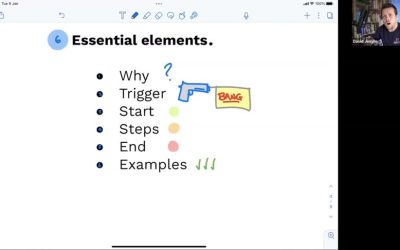
Watch: build an employee onboarding process step by step (9 minutes).
Why most onboarding falls short
If onboarding isn’t producing results it’s rarely a missing checklist item. It’s a structural flaw. These are the four most common.
It’s treated as an event, not a system
Onboarding isn’t a day-one tour and a laptop. It unfolds over weeks, starts before the first day and continues until the person works independently. Cram weeks of learning into hours and they retain almost nothing.
It’s owner-dependent
If you train every new hire you’ve built a bottleneck into the most critical phase. It works for one or two hires a year. It breaks when you bring on five in a quarter. And you explain things slightly differently each time.
It’s reactive, not designed
“What did we do last time? Who has that document?” With no template or system every hire gets a different experience that depends on who is free and how organised they feel that week.
It teaches tasks, not context
New hires learn what to do but not why it matters or how their work connects to the business. With context they handle situations the procedure doesn’t cover. Without it they follow steps mechanically and get stuck.
Want templates to build a systems-driven onboarding process?
Download free SOP templates you can customise for onboarding, training and every repeatable process in your business.
Get free SOP templates8 onboarding best practices that actually work
These aren’t tasks to add to a list. They’re principles. Each one addresses a root cause of why onboarding fails. Get them right and the specific steps become almost secondary.
- Start before day oneOnboarding begins when they accept the offer. Use that window: a founder welcome, the handbook or a short video on how the business works, software accounts and email set up, any pre-reading and a message from their buddy. It cuts information overload on day one and signals that they have joined a business with its act together.
- Let systems, not people, do the trainingThe usual approach is “shadow Sarah for a week”. Sarah explains things her way, skips steps she thinks are obvious and is busy. In SYSTEMology the system is the trainer: documented procedures are the primary tool and people add context, encouragement and answers. It scales, it’s consistent and your best people stop repeating the same training.
- Show the big picture firstBefore role-specific procedures, show how the whole business works. We use the Critical Client Flow, a visual map from attracting a client to getting paid. New hires see where they fit, who comes before and after them and why their tasks matter. It stops them working in a silo.
- Assign an onboarding buddyA peer, not the owner or a manager, who answers questions, models the culture and explains the unwritten rules. The buddy handles the human side while the system handles training. It takes pressure off you and gives the new hire a safe place to ask “dumb” questions. Pick someone who follows your systems.
- Set clear expectations with milestonesNew hires worry about whether they’re on track. Define what they should do by week one, day 30 and day 90 and put it in writing on day one. Make milestones specific and observable: not “understand the business” but “complete the client onboarding process independently”.
- Build in feedback loopsDon’t only push information to the new hire. Ask what was confusing, what’s missing and what would have helped them learn faster. Check in at the end of week one, week two and month one. A fresh pair of eyes spots gaps and outdated steps nobody else sees. Your newest team member is your best tester of your systems.
- Use checklists for consistencyA checklist is the simplest system. It makes sure nothing is missed whether you, a team leader or the buddy runs the onboarding. Cover pre-boarding, day one, week one and month one. When something is missing you add it. The checklist captures every lesson from every hire.
- Bake in culture from day oneCulture isn’t a layer on top. It’s the foundation and onboarding is the best chance to build it. Share the company story and values in a founder video, explain how the business runs on documented systems and introduce the team beyond names and titles. New hires who start in a systems-centred business adopt that mindset naturally.
Your existing team will fight it. Your new hires won’t.
People who have been around for years are often the hardest to convert to a systems mindset. New hires aren’t, as long as the playbook is taught during onboarding as “this is just how we do things here”.
Bonus practice: run a dedicated systems induction so your team understands why the processes exist before they touch them. Here’s ours, free to share with your next hire: an 84-minute session and shareable template we run with every new team member.
Real-world lesson: Den Lennie, a video production business owner, used to believe you just hire specialists and let them figure it out. There was too much room for interpretation. After putting systems in place, new hire guidance covered the grey areas and he found liberation within six months.
Your existing team will fight it. Your new hires won’t (39 seconds).
How to measure onboarding success
You can’t improve what you don’t measure. Three metrics matter most.
Time-to-productivity
How quickly new hires perform their core responsibilities without constant guidance. Without documented systems it’s often three to six months. With clear milestones and procedures to follow it can be far faster.
90-day retention
How many new hires make it past the settling-in period. Early departures usually mean people felt lost, unsupported or unclear about expectations. Check onboarding first.
New hire feedback
Ask every new hire to rate their onboarding at the end of month one. Did they feel prepared? Were the systems clear? What was missing? It improves the system and shows them their input matters.
Measuring onboarding at a 15-person service business
Trigger: A new team member completes their first 30 days.
- The manager reviews the milestone checklist: has the new hire completed the day 7 and day 30 targets?
- The new hire completes a 5-question onboarding feedback survey
- Manager and new hire hold a 30-minute review to discuss progress, gaps and next milestones
- The manager updates the onboarding system based on the feedback
- Results are logged to compare against future hires
Endpoint: The onboarding system is refined and the new hire has a clear path for months two and three.
Common onboarding mistakes to avoid
Even well-intentioned businesses make these. Fix them before your next hire.
Information dumping on day one
Covering everything in a single day overwhelms new hires and they forget most of it. Spread the learning across weeks. Focus day one on connection, context and the essentials.
Skipping pre-boarding
The window between offer and start date is a golden opportunity. Do nothing and the new hire arrives cold. Use it to build excitement and handle admin before day one.
No documentation
If onboarding relies on verbal instructions it changes with every person who delivers it. Write the procedures down so anyone can follow them without improvising.
Treating every role the same
Company-wide culture and context should be consistent but role training must match the position. An operations coordinator and a sales rep need different systems on their desk.
Never updating the process
Your onboarding system should improve with every hire. If you built it two years ago and haven’t touched it, it’s almost certainly outdated. The first version of any system is the worst it will ever be.
Frequently asked questions
What are onboarding best practices?
Onboarding best practices are the principles that make new hire integration effective: start before day one, use documented systems as the primary training tool, show the big picture, assign a buddy, set clear milestones, build in feedback loops, use checklists and embed culture from the start. They go beyond a simple checklist to address why onboarding succeeds or fails.
How long should an effective onboarding process last?
About 90 days. The first week covers orientation, culture and core tools. Weeks two to four build role-specific competence through documented systems. Months two and three focus on independence, performance milestones and integration into the wider team. Some businesses extend structured support to six months for complex roles.
What is the difference between onboarding and orientation?
Orientation is a one-time event, usually on day one, covering logistics such as an office tour, introductions, paperwork and IT setup. Onboarding is a sustained system over weeks or months that includes training, cultural integration, role-specific learning and milestone tracking. Orientation tells someone where the bathroom is. Onboarding teaches them how the business works and where they fit.
How do you onboard employees in a small business?
Small businesses have an advantage: they can create personal, culture-rich onboarding. Start by documenting your key processes as SOPs. Build a simple checklist covering pre-boarding, day one, week one and month one. Record a welcome video and assign a buddy. The key is to systemise the process so it doesn't depend on you delivering it every time.
What should happen before a new hire's first day?
Send a welcome email or video from the founder, set up their accounts and email, share the handbook or company overview, introduce their onboarding buddy and send any role-specific pre-reading. This reduces information overload on day one and signals that your business is organised and invested in their success.
How do documented systems improve employee onboarding?
They turn onboarding from a person-dependent activity into a consistent, scalable process. When procedures are written down, new hires can follow them without waiting for someone to be free. The system becomes the trainer and people provide supplementary support. That reduces errors, shortens time-to-productivity and means quality no longer depends on who is available that week.
How do you know if your onboarding process is working?
Track three things: time-to-productivity (how quickly new hires perform independently), 90-day retention (whether people stay past the settling-in period) and new hire feedback scores. If new hires take too long to ramp up, leave early or report confusion, your onboarding system needs attention.
Great onboarding improves with every hire
It isn’t about having the perfect plan. It’s about having a system that gets better with every person who joins.
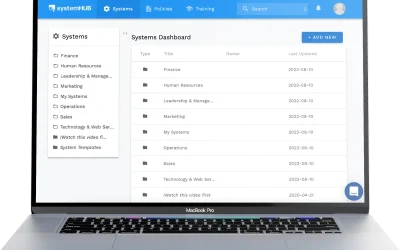
These practices aren’t complicated. They’re intentional: start before day one, let systems do the training, show the big picture, assign a buddy, set milestones, gather feedback, use checklists and build culture from the start. They work whether you have five employees or fifty. They’re exactly what you can document, store and manage in a tool like systemHUB so onboarding improves with every hire, not just the ones you personally oversee.
Keep reading
Or browse all guides and the business systems guide.
Build onboarding systems your whole team can follow
Store, manage and assign every onboarding procedure in one place and give new hires a clear path from day one.
14-day free trial. No credit card required.